

Start here: 60-second safety steps before you troubleshoot
If you smell “rotten eggs,” sulfur, burning, or “gas,” treat it as a safety event first. Your goal is not to identify the smell. Your goal is to avoid ignition and exposure.
The 60-second plan
- Stop. Don’t investigate.
- Leave the home immediately (get outside).
- Do not create sparks: don’t flip switches, don’t use garage door openers, don’t light candles, don’t start a car in an attached garage.
- From a safe location, call 911 and/or your gas utility (follow local guidance).
- If anyone feels sick: get fresh air now and seek urgent help.
Applies: any “gas-like” smell; strong sulfur/rotten egg odor; sudden intense odors
Not for: “mild musty smell over weeks” (that’s usually moisture/mold—different playbook)
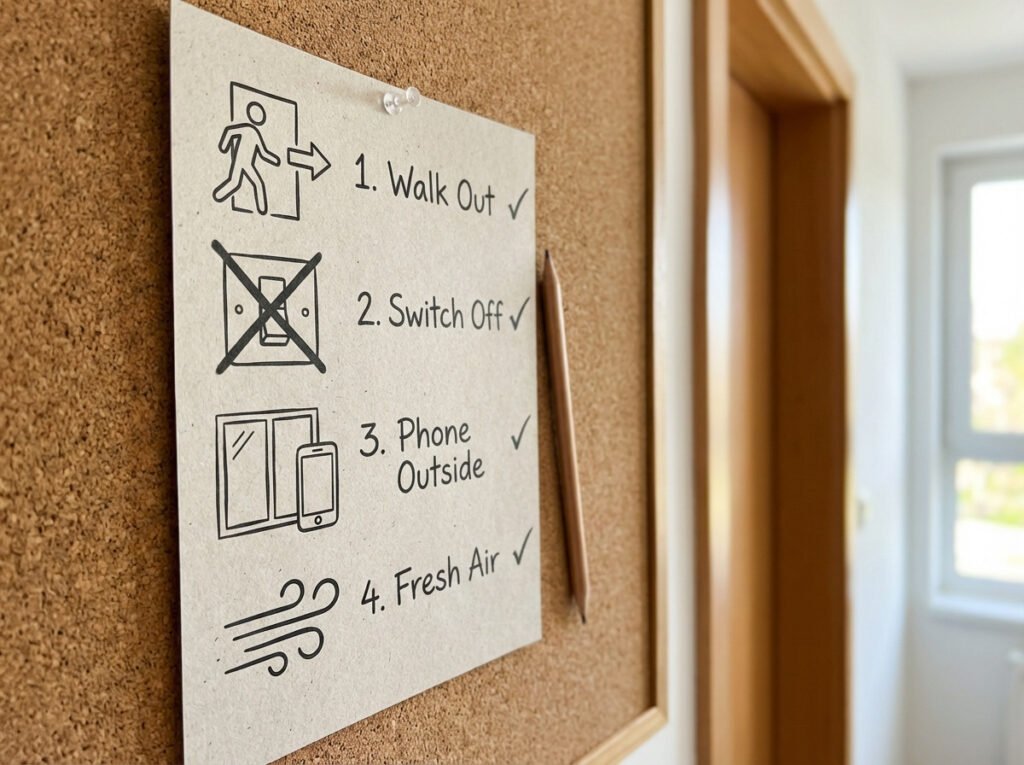
RED LINE Safety Module (Clear Lines. Clear Actions.)
Stop DIY and escalate immediately if ANY of these are true:
- Strong rotten-egg / sulfur odor that appeared suddenly or is getting stronger
- Symptoms: headache, dizziness, weakness, upset stomach, vomiting, confusion, chest pain
- Someone is asleep, elderly, a child, pregnant, or medically fragile (don’t “test it longer”)
- You suspect CO (CO has no smell, but can be present with combustion problems)
- You hear hissing near a gas appliance or smell gas in an enclosed area
Red-line actions
- Leave immediately and stay out.
- Do not use phones or switches inside the home; call from outside.
- Call 911 (and your gas utility) from a safe location.
- If anyone is symptomatic, get into fresh air and seek emergency care.
Authority consensus (what the big safety orgs agree on): Leave immediately and avoid anything that could spark ignition; call for help from outside.
WellZenx field note (practical): If you can smell it in multiple rooms, act as if it’s “serious enough” and treat it as an evacuation-first event.
What that smell could be (so you don’t guess wrong)
A “rotten egg” smell often makes people think “natural gas.” Many utilities add an odorant so leaks are easier to notice. But a similar smell can also come from sewer gas (especially if a drain trap dries out) and from other home sources.
Important safety reminder: carbon monoxide has no smell. You cannot “smell” CO.
Applies: you need a quick mental map of possibilities
Not for: staying inside to compare smells (do that only after safety is cleared)
If you also have bathroom drain odors, see bathroom floor drain smells for the trap-seal test and prevention routine.

Original Asset: Gas Smell Decision Tree (Print this)
Use this after you are safely outside.
Decision Tree
- Is the smell strong right now inside the home?
- Yes → Stay out. Call 911 / gas utility.
- No / faint → continue.
- Any symptoms (headache, dizziness, nausea, confusion)?
- Yes → Fresh air now. Seek urgent help. Do not re-enter until cleared.
- No → continue.
- Is it near a gas appliance (stove, furnace, water heater) or you hear hissing?
- Yes → treat as a gas leak. Call from outside.
- No → continue.
- Is the odor strongest near a drain (floor drain/sink)?
- Yes → possible sewer gas; use the drain isolation steps after safety is cleared.
- No → continue.
- Does the smell show up when the range hood or bathroom fan runs?
- Yes → possible pressure/backdrafting; do not ignore—get pro guidance if it repeats.
WellZenx field note: Don’t “prove it’s nothing.” Prove it’s safe.
After you’ve left: who to call (and what to say)
If you suspect a gas leak
Call your gas utility and/or 911 from outside. Safety guidance commonly warns against using switches or anything that can spark and emphasizes leaving first.
Say this:
- “I smelled gas in my home.”
- “Everyone is outside.”
- “The odor is (strong/faint) and was noticed near (kitchen/furnace area/etc.).”
- “No one is using switches or flames.”
Applies: odor suggests gas, especially near appliances
Not for: trying to ventilate by turning on fans (fans can involve switches and motors)
If symptoms are present: treat CO as a possibility
Even if you smell something, CO can still be part of the risk when fuel-burning equipment is involved. CDC lists common CO poisoning symptoms (headache, dizziness, weakness, upset stomach, vomiting, chest pain, confusion) and emphasizes moving to fresh air.
Mayo Clinic also notes CO has no odor and recommends getting into fresh air and seeking medical care right away when exposure is suspected.
Applies: symptoms + any fuel-burning appliance; people feel better outdoors
Not for: “just a little tired” without any odor or exposure clues (use a general indoor air check instead)
If your home often feels “stuffy,” see how to tell if a room feels stuffy because of CO₂ or humidity for a non-emergency comfort diagnosis (not for gas-leak events).
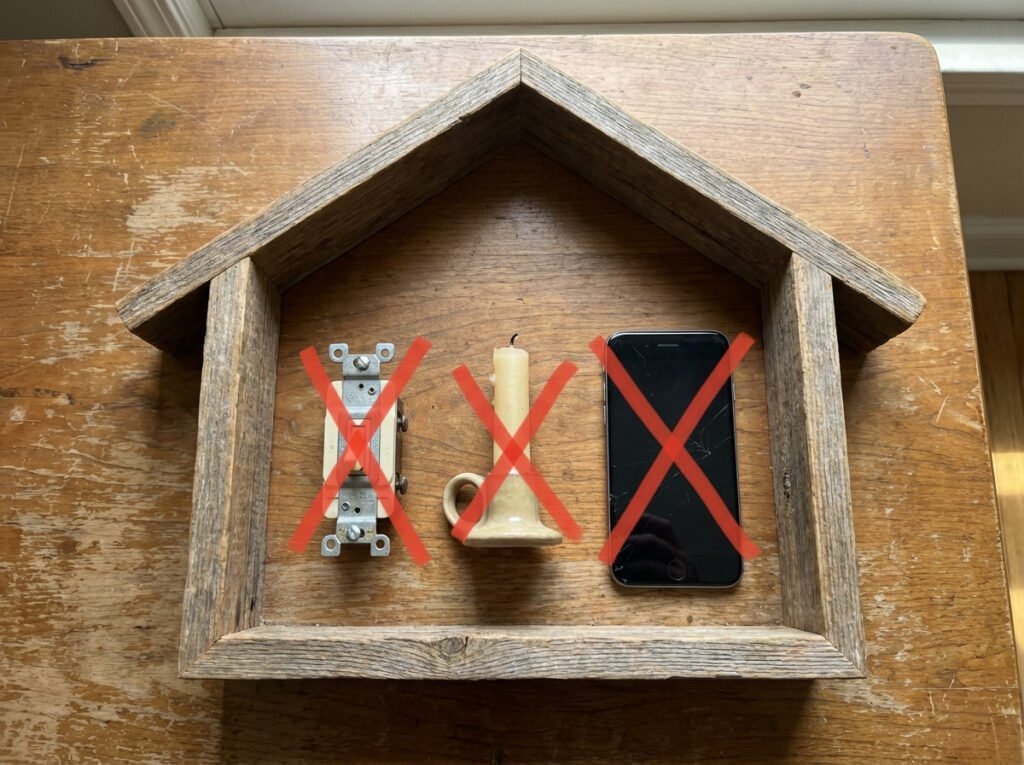
What NOT to do (these are common dangerous mistakes)
- Do not flip light switches “just once.”
- Do not light matches/candles to “test it.”
- Do not stay inside because the smell is “not that bad.”
- Do not restart appliances to see if it goes away.
- Do not rely on smell alone (odor strength can vary; CO has no smell).
Applies: always
Not for: none
If the home is cleared as safe: quick, low-risk checks you can do
Only do these after the gas utility/fire department says it’s safe to re-enter.
Check 1: Note the “where”
- Record the room where you first noticed it.
- Record whether it was near a stove, furnace, water heater, or drain.
Applies: smell is intermittent/faint and home is cleared
Not for: any ongoing strong odor
Check 2: Drain vs appliance clue (no tools)
If the odor is strongest near a bathroom drain, you may be dealing with sewer gas. Wisconsin DHS notes sewer gas can contain methane and hydrogen sulfide, and mentions explosion/fire risk when those gases accumulate, so treat repeated strong odors seriously.
Applies: smell localized near drains
Not for: strong whole-home odor or symptoms (call pros)
If it turns out to be drain-related, jump to bathroom floor drain smells for the trap-seal routine.
Check 3: Pressure/backdraft clue
If the smell appears when the range hood runs, see range hood smells worse when it’s on (backdrafting/negative pressure) and consider a pro assessment if it repeats.
Applies: odor correlates with exhaust fans
Not for: ignoring it—repeating backdraft patterns deserve attention
Prevention that’s actually worth doing (not fear-based)
Install CO alarms (and maintain them)
CO is odorless and can be deadly; alarms are a key safeguard.
Applies: homes with fuel-burning appliances, attached garages
Not for: using alarms as a substitute for addressing a known odor event
Keep drains from drying out (for sewer-gas prevention)
Pouring water into rarely used drains maintains the trap seal and reduces sewer gas entry. Sewer-gas guidance commonly calls out drains as entry points.
Applies: guest bathrooms, basement drains
Not for: blocked drains or sewage backup
Fix home “negative pressure” patterns
If odors frequently “pull in” from drains or hallways when fans run, see how to tell if negative pressure is causing odor backflow and correct airflow paths.
Applies: odor worsens with fans/closed doors
Not for: emergency leak situations
FAQ
“It smells like rotten eggs—does that always mean natural gas?”
No. It can be natural gas odorant, sewer gas, or other sources. Treat it as a safety event first, then let pros confirm.
“Can I open windows before I leave?”
If you can do it quickly on your way out without stopping to troubleshoot, fine. Do not delay evacuation.
“What if it’s only faint?”
Faint doesn’t mean safe. Leave first, call from outside, and follow the utility’s guidance.
Author Trust Block
Published: February 4, 2026 (ET)
Updated: February 4, 2026 (ET)
Written by: WellZenx Editorial Team
Reviewed by: Home Environment Standards Editor (WellZenx)
Editorial standards: This article follows our Editorial Policy and fact-checking process.
Why trust this: We base recommendations on widely accepted guidance from sources such as the EPA/CDC and building-science best practices, and we prioritize measurable steps (RH readings, visible moisture clues, dry-out timelines).
Medical disclaimer: This content is for general education and does not replace medical advice.
Related pages: Editorial Policy • Corrections • Medical Disclaimer • About WellZenx