
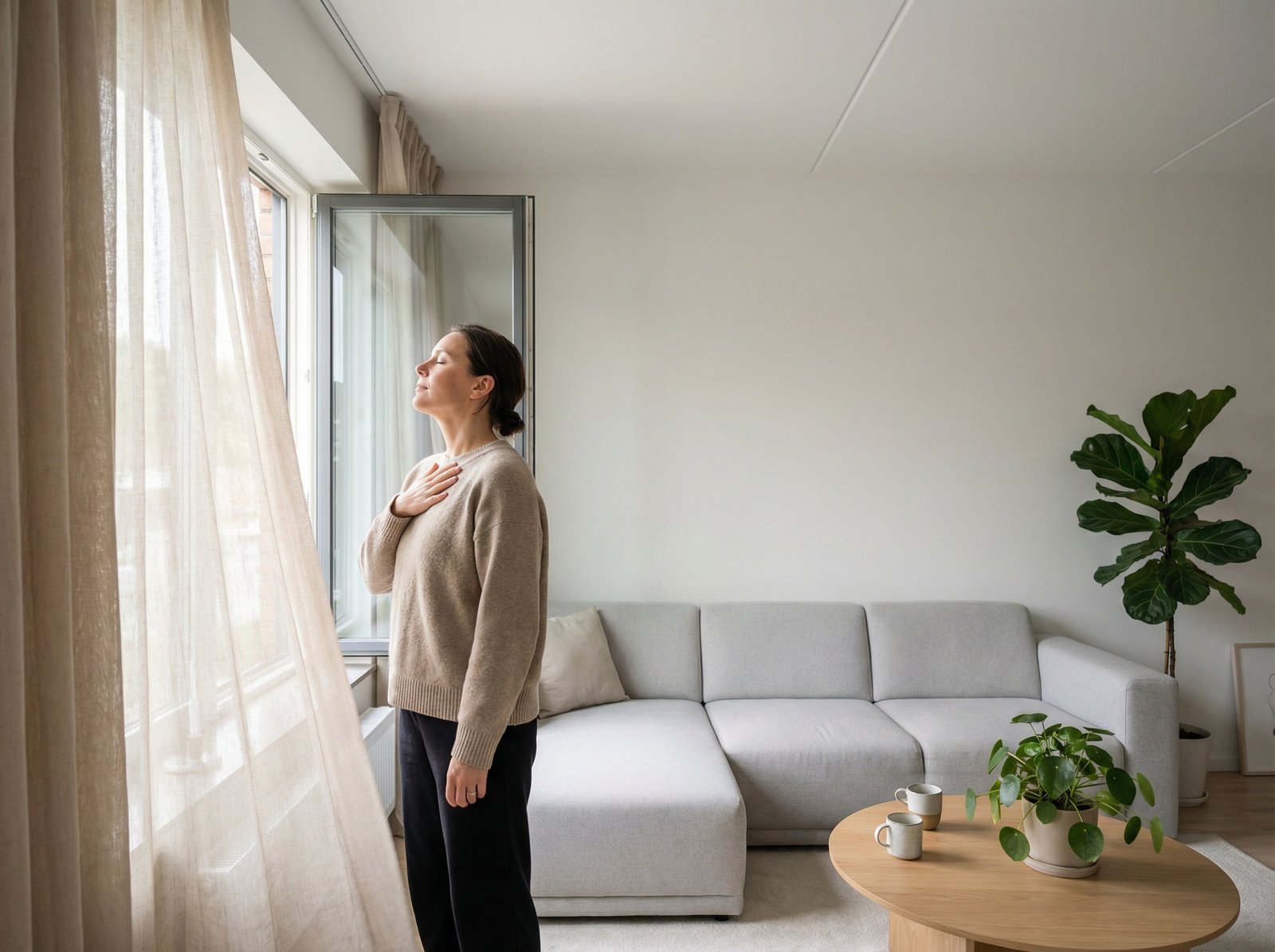
A room-by-room checklist for heavy, hard-to-breathe indoor air
If the air feels thick at home or hard to breathe, it’s usually caused by low airflow, humidity patterns, lingering odors, or dust traps—especially in rooms that stay closed.
This article focuses on practical home-environment causes and a simple checkup you can run in under 30 minutes. It is not medical advice and does not diagnose health conditions. The goal is to help you identify common indoor comfort triggers—airflow problems, humidity patterns, lingering odors, and dust traps—that can make indoor air feel harder to breathe.
Quick answer: If the air feels thick at home, one or more of these are usually true:
- Airflow is low, so stale air isn’t being exchanged efficiently.
- Humidity is high (air feels heavy) or very low (air feels drying and irritating).
- Odors, cooking residue, or fragrance-based products linger in the room.
- Dust and “soft surfaces” hold particles and smell, especially in closed rooms.
- The room is warmer than you realize, which can amplify the heavy-air feeling.
If you want the fastest improvement, start with airflow first (create a real air path), then check humidity and odor sources, then clean the highest-impact dust zones—not the entire house.
Humidity vs Stale Air vs Irritants (Quick Comparison)
Humidity high:sticky/heavy + condensation + musty pockets
Stale air / low airflow:worse with door closed + improves after “air swap”
Irritants/odors:throat/nose irritation + fragrance/cooking/pets + localized smell zones
What “thick air” feels like at home (common clues)
“Thick air” is often a combination of sensation and environment. People use it to describe:
- Air that feels stale or “closed up”
- A room that feels warm and still, with little movement
- A mild odor that lingers (musty, cooking, pet, or fragrance)
- A subtle irritation in the throat or nose
- A room where you feel more tired or foggy than you expect
If the problem feels more like low energy than breathing discomfort, see why you may feel tired at home but fine outside.
The 30-minute home checkup when air feels thick at home
Use this checkup once, then repeat on another day. Consistent patterns are more useful than a single test.
Step 1: Identify the “worst room”
Pick the room where the air feels thickest. Make a quick note:
- Does it feel worse in the morning, afternoon, or at night?
- Does it feel worse when the door stays closed?
- Is there any lingering smell (even mild)?
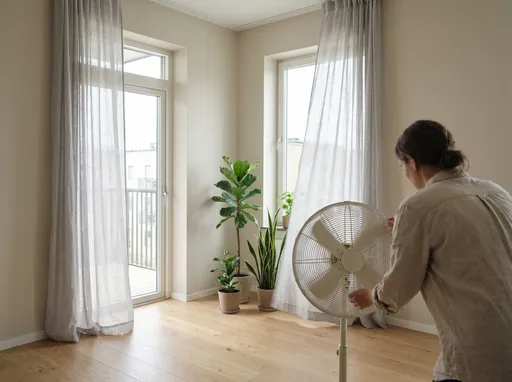
Step 2: Run a true “air swap”
Many people open one window and expect relief. A true air swap needs a path.
Do this for 10 minutes:
- Open two openings that create a path (window + door, or windows on different sides).
- Keep interior doors open so air can move through the home.
- If you have a fan, place it near one window facing outward to push stale air out.
Then pause and check: does the room feel lighter or easier to breathe? If yes, airflow was a major factor.
Step 3: Check for odor zones
Walk through the thick-air room and quickly scan these areas:
- Closet door and stored fabrics
- Rugs, curtains, fabric furniture
- Trash or pet areas
- Kitchen-adjacent spaces (cooking residue often travels)
- Bathroom-adjacent spaces (humidity and dampness drift)
If the “thick” feeling is stronger near one zone, you’ve found a likely driver.
Step 4: Temperature and moisture clues
Without tools, you can still spot patterns:
- Condensation on windows or a faint damp smell suggests higher humidity.
- Dry throat or scratchy nose in the morning suggests dryness or irritants.
- A room that feels warmer than others often feels “heavier,” even if the difference is small.
Common causes of thick indoor air (and what to do first)
1. Low airflow and trapped stale air
A closed room with limited exchange can feel heavy quickly—especially bedrooms, home offices, and spare rooms.
Try first:
- Create a daily air swap for 10–15 minutes.
- Keep the door open more often.
- Avoid blocking vents and returns if you use HVAC.
2. High humidity (heavy, sticky, lingering feeling)
High humidity can make air feel thick, warm, and less refreshing. It also helps odors linger longer.
Try first:
- Run bathroom ventilation consistently after showers.
- Don’t let damp towels or laundry sit in closed areas.
- Air out moisture zones before you try to “freshen” the whole house.
3. Cooking residue and lingering odors
Even light cooking can leave residue and odor that settles into fabrics and surfaces. In a closed home, it can make air feel “dense,” especially at night.

Try first:
- Use kitchen exhaust while cooking.
- Crack a nearby window for a short purge afterward.
- Keep doors open so air doesn’t get trapped near the kitchen.
4. Musty or damp pockets in closets and corners
Try first:
- Open the closet door for part of the day.
- Air out stored fabrics that smell stale.
- Check under-sink areas for subtle dampness.
5. Dust traps in the room you spend the most time in
Soft surfaces and clutter zones hold dust and smell. A room can feel thicker simply because it has more “storage” for particles and odor.
Try first:
- Clean the area within a few feet of where you sit or sleep.
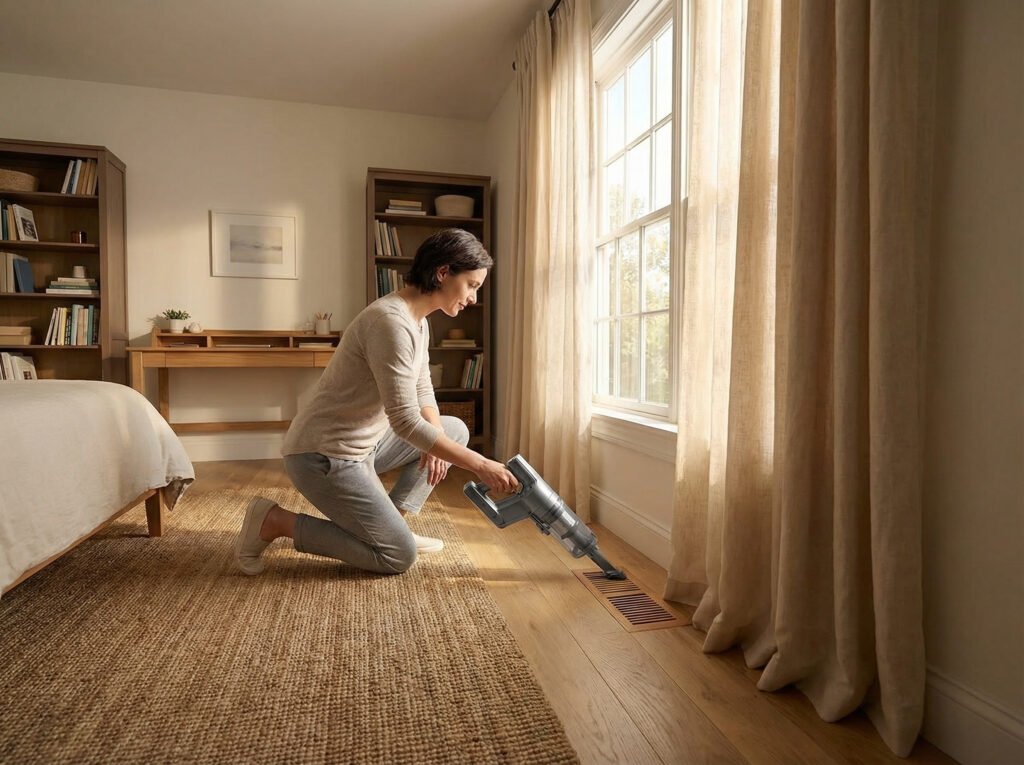
- Focus on rugs, curtains, under-bed storage, and vent areas.
- Avoid fragrance sprays as a substitute for actual removal.
6. Fragrance overload (clean doesn’t always feel fresh)
Strong fragrance can irritate the throat and nose. In a closed room, it can build up and feel heavy.
Try first:
- Remove or reduce scented products in the room.
- Let freshly washed bedding air out if detergent scent is strong.
- Ventilate briefly instead of layering more fragrance.
7. Slight overheating in a still room
Warm, still air often feels thicker. You don’t need a dramatic temperature change for it to matter.
Try first:
- Keep the room slightly cooler.
- Improve airflow instead of blasting air directly at your face.
- Pay attention to time-of-day patterns (heat buildup later in the day is common).
Practical fixes when air feels thick at home
You don’t need to do everything at once. Consistency beats intensity.
- Run a 10-minute air swap once a day (or every other day at minimum).
- Keep doors open for the rooms that feel worst.
- Reduce odor storage: wash stale fabrics and keep closets aired out.
- Improve ventilation habits in bathroom and kitchen zones.
- Clean the highest-impact dust zones near where you sit and sleep.
- Use fragrance less, and rely more on airflow and removal.
If you want broader low-cost fixes, start here to improve indoor air quality without expensive equipment.
When to seek help
If you experience severe symptoms (such as intense dizziness, chest tightness, or sudden breathing difficulty), seek appropriate professional help. If there is a strong chemical smell, burning smell, or a safety alarm is triggered, leave the area and address the source immediately.
For non-urgent situations, a repeatable home checkup is a practical first step to improving comfort and identifying patterns.
FAQ
Why does air feel thick at home even when the room looks clean?
Because ventilation patterns, humidity pockets, and odors trapped in soft surfaces can make air feel “heavy” even without visible dirt. Start with a 10-minute air swap, then check odor zones and moisture clues.
Why does the air in my house feel thick at night?
At night, rooms are often more closed, airflow drops, and odors or heat build up. A short evening air swap can help.
Why is it hard to breathe in my room but not in other rooms?
Room-specific factors—closed doors, dust traps, humidity pockets, or lingering odors—can make one space feel heavier.
Does humidity make air feel thick?
Yes. Higher humidity can make air feel heavier and less refreshing, and it can keep odors lingering longer.
Can cooking make indoor air feel heavy?
Yes. Cooking residue and odors can settle and linger, especially without good exhaust and airflow.
What is the fastest fix I can try today?
Create a true air path (two openings), run a 10-minute air swap, and remove the strongest odor or dust zone in the room.
Why does the air feel thick to breathe at home even when the house looks clean?
Because “thick air” is often caused by ventilation patterns, humidity pockets, and lingering odors trapped in soft surfaces—not visible dirt. Start with a 10-minute air swap, then check humidity clues and odor zones to find the real driver.
Written by:WellZenx Editorial Team
Reviewed for clarity:Home Environment Content Standards (internal)
Editorial standards:This article follows our Editorial Policy and fact-checking process.
Medical disclaimer:Information is for general education and does not replace medical advice.
Last updated:February 26, 2026
Related pages:Editorial Policy • Medical Disclaimer • About the Author