
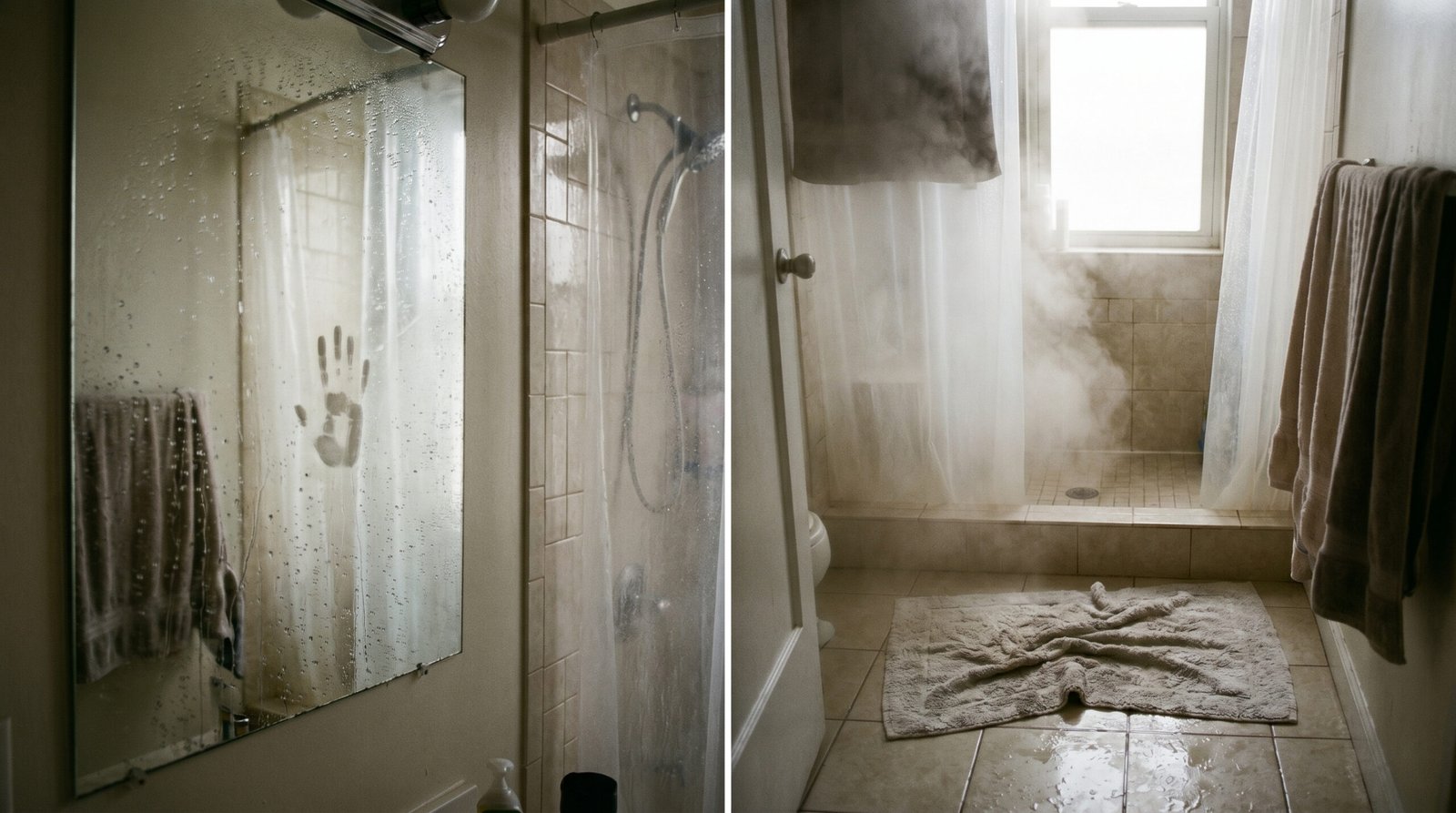
Bathroom Smells Musty After a Shower? What It Usually Means and What to Check First
If your bathroom smells musty after a shower, the problem is usually not “dirty air.” It usually means moisture is staying in the room too long and getting trapped in the places that dry slowly.
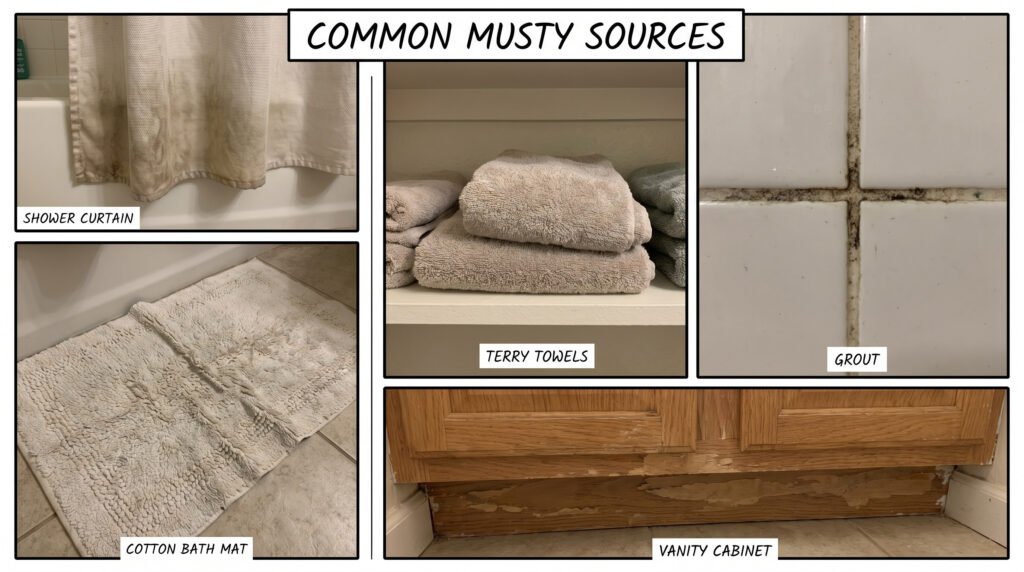
That could be the shower curtain, grout lines, bath mats, towels, the vanity base, or a weak exhaust setup that never clears humid air fast enough. The smell often gets stronger after hot showers because warm moisture reaches hidden surfaces, then sits there.
If the smell is limited to the bathroom and appears mainly after bathing, start with moisture and drying time. If the same smell is spreading through the whole home, use a broader hidden moisture checklist for a clean house that smells musty instead.
This guide is for a bathroom that smells musty after showers. It is not for strong sewage odor, gas smell, or active water leaks. If the odor is clearly coming from the drain, a shower drain smell test is the better first step.
What a post-shower musty smell usually means
A musty smell after bathing usually points to one of these patterns:
- the room stays humid too long after showering
- wet fabric or soft materials are holding odor
- water is getting into a hidden edge or corner
- a bathroom surface looks clean but never fully dries
- a drain smell is being mistaken for a moisture smell
The key is timing. If the smell is mild before the shower but clearly worse after steam and humidity rise, the bathroom likely has a drying problem, not just a “cleaning problem.”
Bathrooms create moisture every day. That moisture can become a bigger indoor comfort issue when ventilation is weak, especially in homes that already struggle with high indoor humidity and heavy air.
Start with this 10-minute bathroom check
Do this before you deep-clean anything.
1. Check whether humidity is leaving the room
Run the bathroom fan. Then ask:
- Does the mirror clear within a reasonable time?
- Does the room still feel damp 20 to 30 minutes later?
- Does the smell stay trapped with the door closed?
If the room stays wet and heavy for too long, the bathroom is not clearing moisture well.
A bathroom fan can be on and still underperform. The real question is not whether it makes noise. The real question is whether it removes steam fast enough to keep surfaces from staying damp.
2. Do a fast smell map
Check these spots one by one:
- shower curtain or liner
- bath mat
- folded towels
- grout lines
- caulk around tub or shower edge
- vanity toe-kick or cabinet base
- floor corners near the tub or toilet
- the area around the drain
You are looking for the one zone that smells stronger up close.
If the smell is strongest near the shower drain, stop treating the whole bathroom as the problem. Use a shower drain smells guide before you scrub every surface in the room.
3. Touch the slow-dry surfaces
Feel these carefully:
- bottom edge of the shower curtain
- outer edge of the bath mat
- wall corners near the tub
- cabinet base under the sink
- the floor around the shower entry
If they still feel cool, damp, or slightly soft well after the shower, you found the type of surface that can keep re-releasing a musty smell.
4. Check what stays wet every day
A bathroom does not need a leak to smell musty. Daily moisture is enough if it never gets fully removed.
Ask:
- Do towels stay in the bathroom all day?
- Does the bath mat dry slowly?
- Does the shower curtain stay bunched up?
- Does the bathroom door stay closed after showers?
- Does the mirror stay foggy longer than expected?
If the answer is yes to several of these, the odor may be coming from repeated moisture storage, not from one dramatic source.
The most common causes
Weak exhaust or poor air movement
This is one of the most common causes.
If humid air stays in the room too long, moisture settles into fabrics, corners, paint edges, and cabinet materials. A fan that turns on but does not really move moisture out can leave the room smelling fine at first, then musty later.
Common clues:
- mirrors stay fogged for a long time
- the room still feels damp after the shower
- the smell is worse with the door closed
- the bathroom smells better after a strong air-out
- towels take too long to dry
If the bathroom is one of several rooms that feels humid or heavy, the issue may connect to broader indoor humidity problems at home, not just one bathroom habit.
Wet towels and bath mats
Towels and bath mats are odor reservoirs. They absorb water, stay warm, and often dry slowly in closed bathrooms.
If your bathroom smells musty only after showering, check the simplest source first:
- towel pile
- hanging towel that never fully dries
- thick bath mat
- damp laundry basket
- fabric shower mat near the tub
Many bathrooms “mysteriously” smell musty because wet fabric keeps feeding the odor.
Do not only smell the air. Smell the fabric. If one towel or mat smells stronger up close, remove it from the room and recheck the bathroom after it airs out.
Shower curtain, liner, or door track
These areas often look acceptable from a distance but stay damp longer than people realize.
Watch for:
- the lower edge of the curtain smelling stronger than the rest
- liner folds that stay wet
- shower door tracks holding water
- soap residue mixed with moisture
- corners where water sits after every shower
This is a common cause when the smell seems strongest near the tub or shower itself.
Spread the curtain or liner fully open after bathing. A bunched liner creates damp folds where odor can rebuild every day.
Grout, caulk, and wall edges
A bathroom can look clean and still smell musty if porous or cracked areas keep holding moisture.
That includes:
- old grout lines
- tub-to-wall caulk
- floor edges near the shower
- baseboards near wet zones
- corners behind the toilet or vanity
If the smell is strongest near one fixed edge, stop treating the whole room as the problem. Focus on that one damp-holding zone.
Cracked caulk is especially important. If water can get behind it, the smell may return even after surface cleaning.
Hidden moisture under the vanity or around the sink base
Steam and splash water can slowly affect cabinet bases and lower edges, especially if airflow is poor.
Common signs:
- musty smell strongest near the vanity
- cabinet base feels cooler or slightly damp
- odor returns quickly after cleaning
- one lower corner smells worse than the room overall
- stored items under the sink smell stale
This is especially likely if the bathroom smells fine high up but worse near the floor.
Open the vanity doors after a shower if that area smells trapped. If the cabinet base is soft, swollen, or repeatedly damp, treat it as a moisture source, not just an odor problem.
Drain odor being mistaken for “musty”
Not every bad bathroom smell is the same.
A musty smell is usually soft, damp, and stale.
A drain or sewer-related smell is often:
- sharper
- more sour or sewage-like
- stronger near the drain
- less tied to wet towels or steam-holding surfaces
- more noticeable when water runs or after the room sits unused
If the smell seems strongest right at the drain, do not assume the whole bathroom has a mold-like moisture issue. The source may be more specific.
If the odor is coming from a floor drain rather than the shower, use the bathroom floor drain sewer odor guide instead.
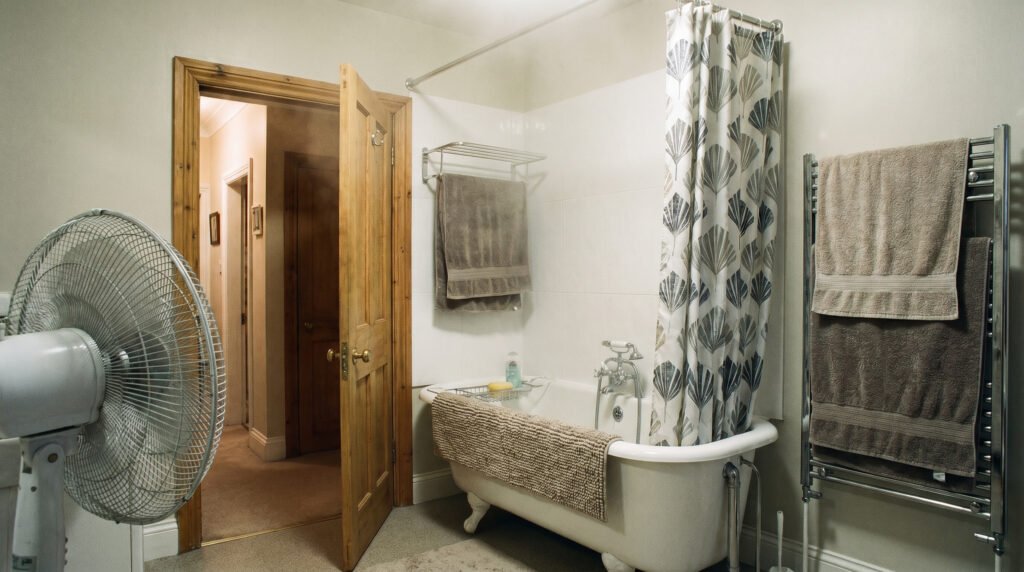
A 48-hour bathroom dry-out reset
If you want the fastest improvement, do this for the next two days.
Right after every shower
- run the fan longer than usual
- leave the door cracked open if possible
- spread the curtain or liner open so folds can dry
- hang towels so air reaches both sides
- lift or fully dry the bath mat
- wipe the shower edge if water collects there
Once the room is no longer steamy
- wipe the shower edge or door track
- check one problem corner with a dry paper towel
- leave cabinet doors open briefly if the vanity area holds odor
- remove any damp laundry from the room
- avoid using fragrance sprays to hide the smell
Fragrance can make the bathroom smell “clean” for a short time, but it does not remove the damp source. For broader low-cost home air habits, use these simple ways to improve indoor air quality without expensive equipment.
At the end of day one
Ask:
- Is the smell weaker?
- Is one zone still clearly worse?
- Does the room now smell normal until the next shower?
- Does the odor return only when steam builds up again?
If the smell improves fast, your issue was likely routine moisture storage. If it comes back in the same exact spot, you likely have one hidden moisture-holding area that needs targeted attention.
How to tell this apart from other bathroom smells
Musty after a shower
Usually tied to humidity, damp fabric, slow-dry surfaces, or weak ventilation.
This smell often gets worse after steam rises, then fades as the room dries.
Sewer or drain smell
Usually sharper, dirtier, or more obvious near a drain or floor drain.
If the smell seems to come from the drain opening, do not waste time cleaning towels and walls first. Start with the drain path.
Urine or ammonia smell
Usually stronger near the toilet base, grout, trash, or one repeated splash zone.
This type of smell is not usually caused by shower humidity alone.
General whole-house musty smell
Usually not limited to shower timing. It often shows up in closets, bedrooms, basements, or multiple rooms.
If your whole home smells musty, the better next step is the clean house musty smell checklist, because the source may be under sinks, in HVAC areas, in closets, or in stored fabrics.
Why the smell often comes back after cleaning
Surface cleaning helps, but it does not fix a drying problem.
A bathroom smell can come back because:
- the fan does not clear humidity fast enough
- towels and mats stay damp
- the shower curtain stays folded while wet
- grout or caulk keeps absorbing moisture
- a cabinet base or floor edge is holding odor
- the drain has biofilm or a water-seal issue
The goal is not to clean harder. The goal is to find what keeps getting wet and then drying too slowly.
When this is a bigger problem
Take it more seriously if:
- the smell returns in the same corner every day
- paint or caulk looks damaged
- cabinet material feels soft or swollen
- the room stays damp for a long time after each shower
- you notice visible spotting, staining, or repeated dampness
- the smell spreads outside the bathroom
At that point, the issue is no longer just “freshen the bathroom.” It is “find the repeating moisture source.”
Simple prevention habits
Use these after the bathroom smells normal again:
- Run the fan during the shower and after the shower.
- Keep the bathroom door cracked open when privacy is no longer needed.
- Spread the shower curtain or liner open.
- Hang towels flat instead of bunching them on hooks.
- Wash or rotate bath mats often.
- Keep the vanity base dry and uncluttered.
- Remove damp laundry from the room.
- Check grout and caulk before the smell becomes obvious again.
These habits matter because a musty bathroom is usually a cycle. Moisture enters, air movement is too weak, soft materials hold odor, and the smell returns after the next hot shower.
FAQ
Why does my bathroom smell musty only after I shower?
Because steam and moisture are likely waking up an odor source that stays hidden when the room is dry. Wet fabric, weak ventilation, grout, caulk, and cabinet edges are common causes.
Can a bathroom smell musty even if it looks clean?
Yes. A bathroom can look clean while still holding moisture in curtains, mats, grout, caulk, cabinet bases, and hidden lower edges.
What should I check first?
Start with the shower curtain, bath mat, towels, vanity base, grout, caulk, and how quickly the room actually dries after a shower.
How long should the smell take to improve?
If the problem is mostly slow drying and trapped humidity, you may notice improvement within one to two days of better drying habits.
When should I worry about a hidden moisture issue?
If the smell keeps returning in the same exact spot, or if a surface feels soft, swollen, stained, or repeatedly damp, investigate that area more closely.
About the Author
Written by: WellZenx Editorial Team
Reviewed for clarity: Home Environment Content Standards
Editorial focus: practical home air quality, humidity, odor, and everyday indoor comfort problems
Medical disclaimer: This article is for general home-environment education and does not replace professional medical, plumbing, mold, or HVAC advice.