
Closet Smells Musty but Clothes Are Clean? What It Usually Means and How to Fix It
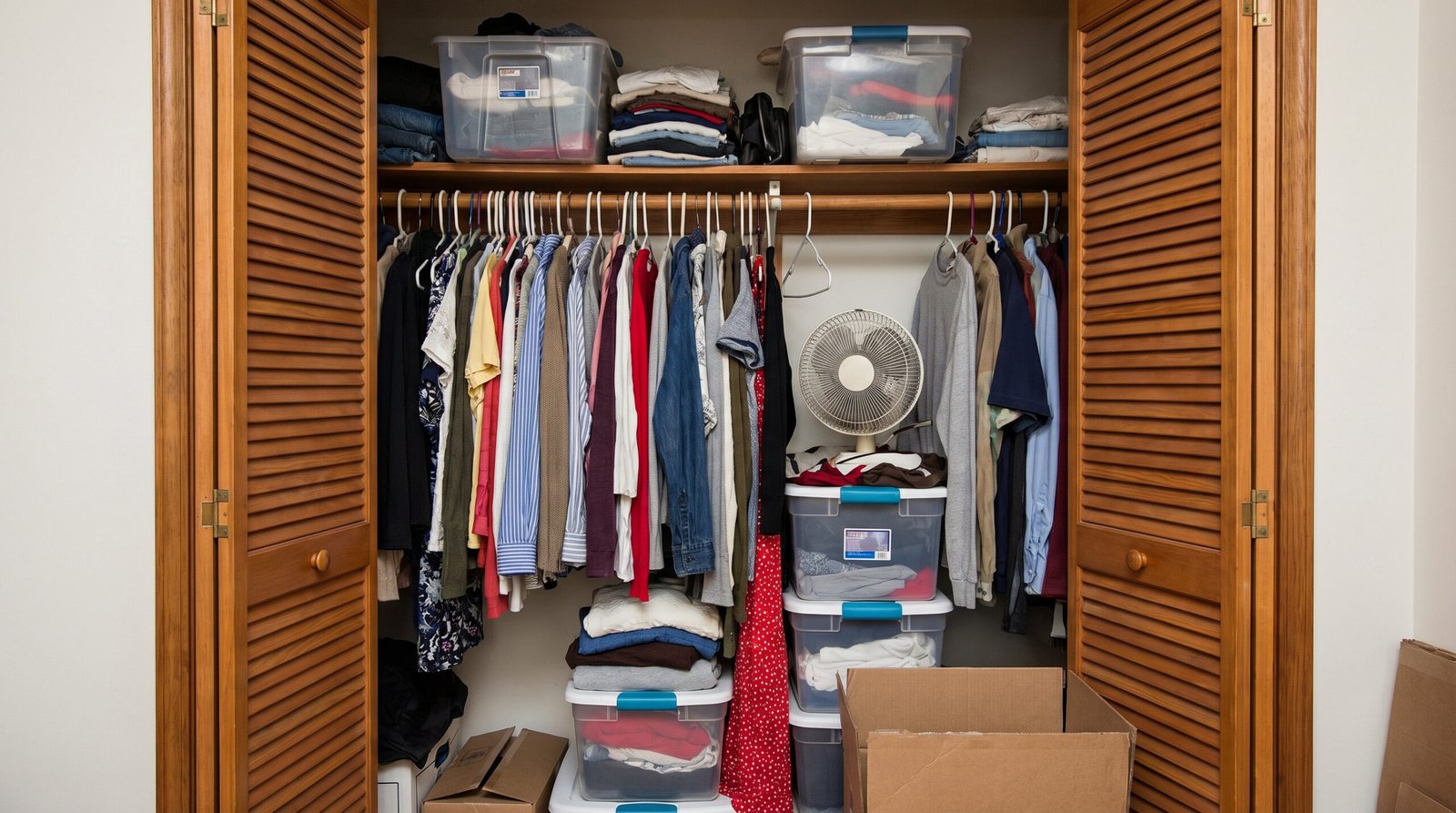
If your closet smells musty but your clothes are clean, the issue is usually trapped moisture and low airflow inside the closet, not dirty laundry. Closets are small, enclosed, and often packed with fabric—so once humidity gets in, it stays there longer than in open rooms.
This kind of smell often shows up even when the rest of the room feels normal. That’s because closets don’t get enough air movement, especially when doors stay closed and clothes are tightly packed.
If the smell is only inside the closet, focus on airflow, fabric spacing, and hidden damp spots. If the same odor exists in multiple rooms, use a hidden moisture checklist for a clean house that smells musty to look beyond the closet.
What a musty closet smell usually means
A musty closet with clean clothes usually points to one of these:
- clothes are packed too tightly to dry fully
- humidity is trapped inside the closet
- fabric is holding residual moisture
- the closet has no airflow or ventilation
- one hidden item is holding odor (shoes, bags, boxes)
- the closet shares a wall with a humid area (bathroom, laundry room)
Closets don’t need a leak to smell musty. They just need still air + fabric + slight moisture.
Start with this 10-minute closet check
Before using any products or deodorizers, find the real source.
1. Smell different zones inside the closet
Don’t just smell the air. Check specific areas:
- hanging clothes
- folded clothes
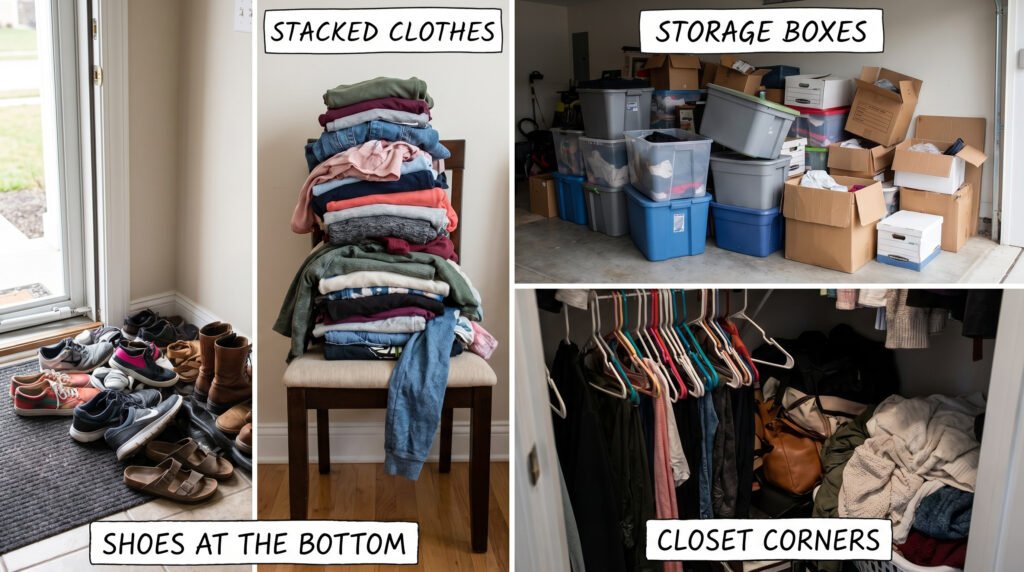
- floor corners
- shoes
- bags or storage boxes
- back wall of the closet
You are looking for one area that smells stronger than the rest.
If the smell is stronger near the floor, it may be trapped moisture. If it’s stronger near clothes, fabric is likely holding odor.
2. Check how tightly clothes are packed
Closets often smell musty because air cannot move.
Ask:
- Are hangers packed tightly together?
- Are clothes touching wall-to-wall?
- Are shelves overfilled?
- Are items stacked without gaps?
When clothes are compressed, they trap humidity and cannot dry fully, especially in warm climates.
3. Feel for hidden dampness
Touch:
- closet walls
- back corners
- floor edges
- items stored long-term (blankets, boxes)
If anything feels slightly cool or damp, even without visible moisture, that’s enough to create a musty smell over time.
4. Check items that hold odor
Some items hold smell longer than clothes:
- shoes
- gym bags
- backpacks
- suitcases
- seasonal storage bins
- rarely used blankets
Remove these items temporarily and recheck the smell. Often, one stored item is the real source.
5. Compare with room air
Open the closet door and step back.
If the room smells normal but the closet smells musty, the issue is airflow isolation, not overall air quality.
If both smell similar, check for broader issues like high indoor humidity and heavy air affecting multiple areas.
The most common causes
Poor airflow inside the closet
Closets are enclosed spaces. When doors stay closed and clothes are packed tightly, air cannot circulate.
This leads to:
- trapped humidity
- slow drying fabric
- stale air pockets
- odor buildup over time
Even clean clothes can smell musty in this environment.
Leaving the closet closed all day, especially after humid conditions, makes the problem worse.
Clothes stored slightly damp
Clothes don’t need to be “wet” to cause odor. Slight residual moisture is enough.
This often happens when:
- clothes are put away too soon after drying
- towels are stored before fully dry
- clothes come from a humid laundry room
- ironing steam adds moisture before storage
If clothes smell fresh outside but musty inside the closet, storage conditions are the issue.
This can connect to problems like a laundry room that smells musty, where fabric picks up moisture before being stored.
Overpacked closet
Too many clothes in a small space reduces airflow.
Common signs:
- hangers are tightly compressed
- clothes feel slightly cool to the touch
- the smell is stronger in the center of the rack
- removing half the clothes improves the smell quickly
Air needs space to move between fabrics. Without that, moisture stays trapped.
Shoes and fabric accessories
Shoes are a frequent hidden source.
They can:
- hold sweat moisture
- trap odor inside
- affect nearby clothes
- create a localized musty smell
Bags and backpacks can do the same, especially if stored after use without airing out.
If the smell is strongest near the bottom of the closet, check shoes first.
Closet shares a humid wall
Closets next to bathrooms or laundry rooms often absorb moisture through shared walls.
This is more likely if:
- the closet backs onto a bathroom
- the wall feels cooler than others
- the smell returns even after cleaning
- the closet smells worse after showers or laundry
If you notice this pattern, also review how nearby spaces handle moisture, such as a bathroom that smells musty after a shower.
Stored items that rarely move
Items that sit for long periods can trap odor:
- seasonal clothes
- blankets
- storage boxes
- fabric bins
If the smell is strongest in one corner, remove everything from that area and check again.

A 48-hour closet reset
If you want the fastest improvement, do this:
Step 1: Empty part of the closet
- remove 30–50% of the clothes
- take out shoes and stored items
- leave the closet partially empty
This allows air to move again.
Step 2: Air out the space
- leave the closet door open
- open windows in the room if possible
- allow cross airflow
- avoid closing the closet during this period
Step 3: Let fabric breathe
- hang clothes with space between them
- avoid stacking tightly
- separate thick fabrics (hoodies, towels)
Step 4: Recheck after 24–48 hours
Ask:
- Is the smell weaker?
- Did removing items reduce the odor?
- Does the smell return when the closet is closed again?
If the smell improves quickly, the issue was airflow and moisture storage.
If it returns in one exact spot, focus on that location.
How to tell what’s causing the smell
Fabric source
Smell strongest on clothes or towels.
Likely cause: slight moisture trapped in fabric.
Shoe or item source
Smell strongest near bottom or one corner.
Likely cause: shoes, bags, or stored items.
Airflow problem
Smell spreads evenly inside the closet.
Likely cause: no ventilation + overpacking.
Wall or structural source
Smell strongest near one wall.
Likely cause: shared humidity from another room.
Whole-room issue
Closet and room both smell.
Likely cause: broader humidity or air quality problem.
In that case, review the clean house musty smell checklist for a wider inspection.
What not to do
- Don’t rely only on fragrance products
- Don’t store clothes tightly packed
- Don’t put slightly damp clothes into the closet
- Don’t keep closet doors closed all the time
- Don’t ignore shoes or stored fabric items
These don’t fix the root cause.
When to take it more seriously
Check further if:
- the smell returns quickly after airing out
- one wall feels damp or cooler
- items feel slightly moist repeatedly
- the smell spreads beyond the closet
- clothes start to pick up odor again
At that point, the issue is no longer just storage—it’s moisture behavior.
Simple prevention habits
- keep space between hangers
- avoid overfilling shelves
- leave the closet open occasionally
- store only fully dry clothes
- rotate stored items periodically
- air out shoes before storing
- avoid sealing fabric in airtight containers without dryness
Closets stay fresh when air can move and fabric stays dry.
FAQ
Why does my closet smell musty but clothes are clean?
Because moisture is trapped in the closet environment, not in the washing process. Poor airflow and tightly packed clothes are common causes.
Can clean clothes smell musty in a closet?
Yes. Clean clothes can absorb odor if stored in a humid, low-airflow space.
Do I need a dehumidifier for a closet?
Not always. In many cases, spacing clothes and improving airflow solves the problem.
How long does it take to fix a musty closet?
You can often notice improvement within 24–48 hours after improving airflow and removing damp items.
What is the fastest fix?
Remove some clothes, open the closet, let air circulate, and identify any specific odor source like shoes or stored fabric.