
Laundry Room Smells Musty? What It Usually Means and What to Check First
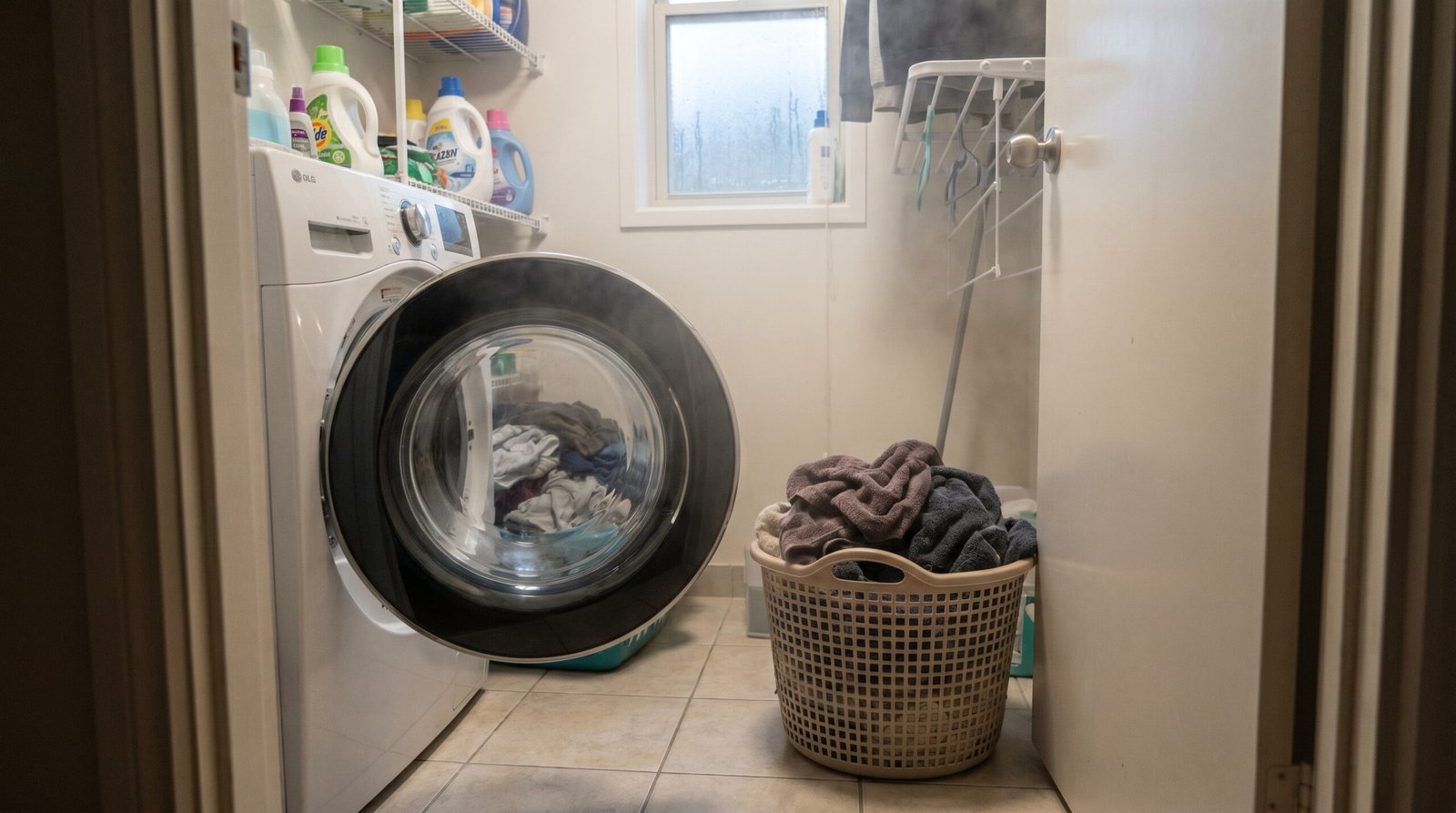
If your laundry room smells musty, the problem is usually moisture that is not drying fast enough. The smell may come from the washing machine, damp towels, lint buildup, a slow-drying floor area, or poor airflow behind appliances.
A laundry room is one of the easiest places for musty odor to build up because it combines water, fabric, heat, detergent residue, and limited ventilation. Even if the room looks clean, one damp surface or one odor-holding fabric pile can make the whole space smell stale.
If the smell is only in the laundry room, start with the washer, wet fabric, and airflow around the machines. If the same odor is spreading into other rooms, use a hidden moisture checklist for a clean house that smells musty instead.
Why laundry rooms smell musty
A musty laundry room usually means one of these things is happening:
- wet fabric is sitting too long
- the washer drum or gasket is holding residue
- the room does not dry well after laundry cycles
- moisture is trapped behind the washer or dryer
- lint and dust are holding damp odor
- a floor drain or utility sink is contributing to the smell
The key is to separate two problems: odor in the laundry itself and odor in the room.
If clean clothes smell musty after washing, the washer or laundry routine may be the main issue. If the room smells musty even when no clothes are inside, look at airflow, hidden dampness, drains, and appliance areas.
Start with this 10-minute laundry room check
Do this before you deep-clean the whole room.
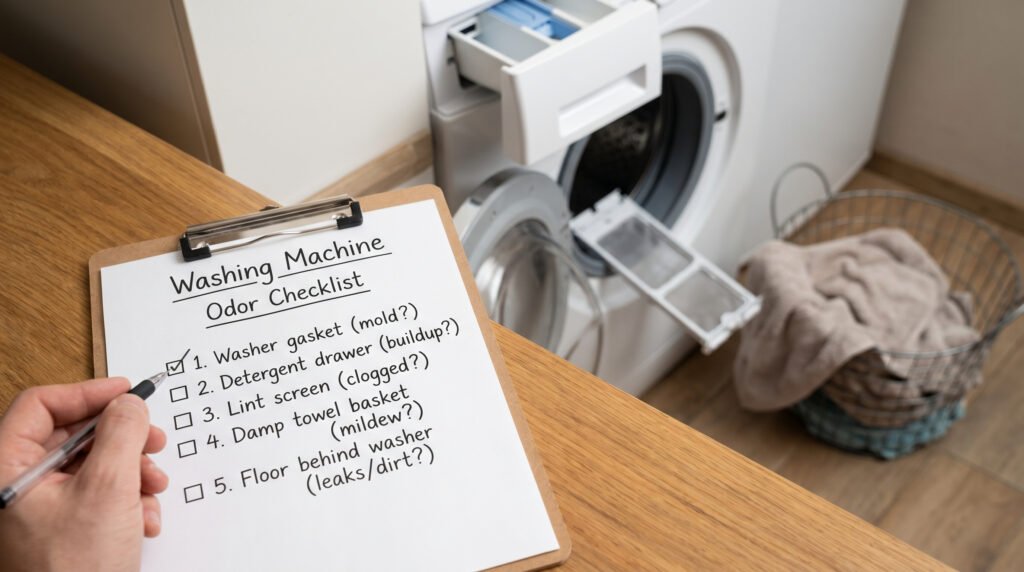
1. Smell the washer first
Open the washer door and smell inside the drum.
Then check:
- the rubber gasket on a front-load washer
- the detergent drawer
- the washer door or lid edge
- the area around the drain hose
- the filter area if your machine has one
If the smell is strongest inside the washer, the room may not be the real source. The washer is likely holding residue, moisture, or trapped lint.
2. Check wet fabric zones
Look for anything that stays damp:
- towels waiting to be washed
- gym clothes
- cleaning rags
- bath mats
- mop heads
- damp socks or shoes
- laundry baskets with poor airflow
One damp towel pile can make a small laundry room smell musty. Fabric holds odor longer than hard surfaces, especially when the room has weak airflow.
If the smell is strongest near towels or bath mats, it may connect to the same moisture pattern that makes a bathroom smell musty after a shower.
3. Check behind and under appliances
Pull the washer and dryer forward if you can do so safely.
Look for:
- dust and lint buildup
- damp flooring
- water marks
- a wet supply hose area
- trapped items behind the machines
- a musty smell near the wall
You do not need standing water for a musty smell. A slightly damp floor edge behind the washer is enough if it stays wet repeatedly.
4. Check air movement
Ask:
- Does the laundry room have a window?
- Does the door stay closed most of the time?
- Does the room feel humid after laundry?
- Does the smell improve when the door stays open?
- Does the dryer make the room warmer or damp-feeling?
If the room feels heavy or humid after washing and drying, the issue may be weak drying airflow, not poor cleaning.
For broader moisture patterns, compare this with high indoor humidity and heavy air because a laundry room can raise humidity in nearby spaces.
Common causes of a musty laundry room
A washer that stays wet inside
Washers need time to dry after use. When the door or lid stays closed, moisture remains inside the drum and gasket. Detergent residue, lint, and body oils can then create a musty smell.
This is especially common with front-load washers because the gasket can trap water in folds.
Check for:
- dark residue inside the rubber gasket
- a sour or stale smell when the door opens
- dampness around the detergent drawer
- odor that gets worse after a wash cycle
After each load, leave the washer door open so the drum can dry. Also wipe the gasket if water sits inside the folds.
Damp towels and laundry piles
Damp laundry is one of the simplest causes, but it is easy to overlook.
Musty odor often starts when wet towels, sweaty clothes, or cleaning rags sit in a basket for too long. The smell then spreads into the room, even before the clothes go into the washer.
Common clues:
- the room smells worse near the hamper
- towels smell stale before washing
- the smell improves after removing fabric piles
- baskets are kept in a closed, low-airflow corner
Use open baskets when possible. Avoid storing wet towels or workout clothes in closed hampers.
Poor ventilation in a small laundry room
A laundry room may be clean but still smell musty if it traps humid air.
This happens when:
- the room has no window
- the door stays closed
- machines are pushed tightly against the wall
- laundry runs often
- the room is next to a bathroom or basement area
A closed laundry room can act like a moisture box. Warm damp air stays inside, then settles into fabric, lint, walls, and corners.
If the room feels stale even after removing laundry, use simple ways to improve indoor air quality without expensive equipment to strengthen your broader airflow habits.
Dryer vent or lint buildup
Lint holds odor and can reduce drying performance. If the dryer is not venting well, the room may become warmer, damper, or more stale than it should.
Check:
- lint screen
- dryer vent hose
- the wall area behind the dryer
- outside dryer vent flap if accessible
- dust and lint around floor edges
A clogged or restricted dryer vent can also be a safety issue, so do not ignore a dryer that takes longer than usual to dry clothes.
Hidden moisture behind the washer
A slow drip or repeated splash can create a musty smell without obvious water.
Check:
- washer supply hoses
- hose connections
- wall valves
- floor under the washer
- baseboard behind the machine
- nearby utility sink pipes
If the smell is strongest behind the washer, focus there first. Do not treat the whole laundry room as the source until you inspect the appliance wall.
Utility sink or floor drain odor
Some laundry rooms have a utility sink or floor drain. If that area smells strongest, the odor may not be coming from laundry at all.
A drain-related smell may be:
- sour
- sewage-like
- strongest near one drain
- worse after the room sits unused
- less connected to damp towels or washer residue
If the smell is strongest near a drain, use a bathroom floor drain sewer odor guide as a comparison point. The room is different, but the drain logic is similar.
A 48-hour laundry room reset
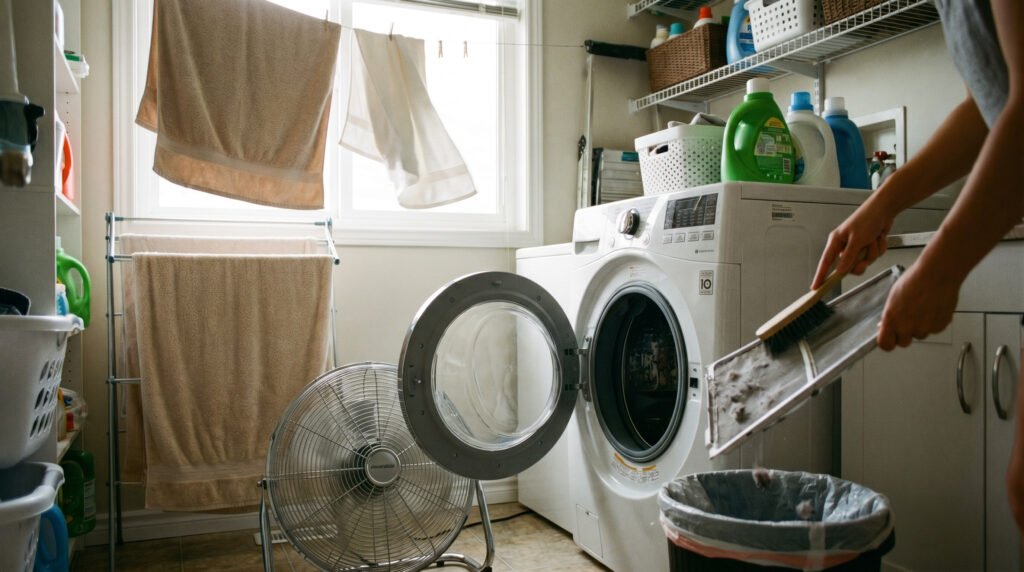
Use this reset if you want the fastest practical improvement.
Right after the next laundry load
- remove clothes from the washer quickly
- leave the washer door or lid open
- pull out the detergent drawer slightly if it stays damp
- wipe visible water from the gasket
- keep the laundry room door open for airflow
During the same day
- remove damp towels, rags, and gym clothes from the room
- clean the lint screen
- check behind the machines
- open a window if the room has one
- run a fan toward the doorway if the room has poor airflow
Before the end of day two
- smell the washer again
- smell the hamper area
- check the floor behind the washer
- check whether the room smells worse after drying clothes
- note whether the odor returns only after laundry cycles
If the room smells better after this reset, the issue was likely moisture storage and low airflow. If the smell returns in the same exact spot, you likely have a specific source that needs closer attention.
How to tell where the smell is coming from
Washer source
The smell is strongest when you open the washer door or lid.
Likely causes:
- wet drum
- gasket residue
- detergent buildup
- trapped lint
- closed-door moisture
Fabric source
The smell is strongest near hampers, towels, bath mats, or cleaning rags.
Likely causes:
- damp fabric
- sweaty clothes
- towels stored too long
- poor basket airflow
Appliance-wall source
The smell is strongest behind the washer or dryer.
Likely causes:
- slow drip
- damp wall edge
- lint buildup
- restricted dryer vent
- trapped item behind appliance
Drain source
The smell is strongest near a floor drain or utility sink.
Likely causes:
- dry trap
- drain biofilm
- sewer-like odor
- stagnant water in the drain area
Whole-room source
The smell is spread evenly across the room.
Likely causes:
- poor airflow
- high humidity
- frequent laundry moisture
- closed-door drying problem
If the smell is no longer limited to the laundry room, compare it with the broader house smells musty but looks clean guide.
What not to do
Do not rely on air fresheners first. They can make the room smell better for a few hours, but they do not remove moisture.
Do not keep the washer sealed after every load. That traps damp air inside the machine.
Do not leave wet towels in a closed basket.
Do not ignore a dryer that suddenly takes much longer to dry clothes.
Do not clean only the visible floor if the smell is strongest behind machines, inside the washer, or near a drain.
When to take it more seriously
Take a musty laundry room more seriously if:
- the smell returns right after every wash
- the floor behind the washer feels damp
- baseboards look swollen or stained
- the dryer makes the room unusually humid
- the washer has visible residue or standing water
- the odor spreads into nearby rooms
- the smell is sharp, sewage-like, or drain-centered
A musty smell is often fixable, but repeating moisture should not be ignored. Moisture that stays hidden behind appliances can become a bigger home problem over time.
Simple prevention habits
Once the laundry room smells normal again, keep the routine simple:
- leave the washer door open after use
- remove wet clothes promptly
- dry towels before placing them in a hamper
- clean the lint screen after each dryer load
- keep airflow around the machines
- keep the laundry room door open when possible
- check hoses and the floor behind the washer monthly
- avoid storing damp cleaning rags in the room
The goal is not to deep-clean the room every week. The goal is to stop the room from storing moisture in the first place.
FAQ
Why does my laundry room smell musty?
A laundry room usually smells musty because moisture is staying in the room too long. Common sources include the washer, damp towels, laundry baskets, lint buildup, poor airflow, or a hidden damp area behind appliances.
Why does my washer smell musty?
A washer can smell musty when water, detergent residue, lint, and body oils stay inside the drum, gasket, or detergent drawer. Leaving the door closed after use makes this worse.
Can damp towels make a laundry room smell musty?
Yes. Damp towels, bath mats, gym clothes, and cleaning rags can hold odor and spread a musty smell through a small laundry room.
Should I worry if the smell is behind the washer?
Yes, check it closely. A musty smell behind the washer may come from a slow drip, damp floor edge, hose connection, or trapped lint and debris.
What is the fastest way to freshen a musty laundry room?
Remove damp fabric, air out the washer, clean the lint screen, check behind appliances, and improve airflow for 24 to 48 hours. If the smell returns in one exact spot, focus on that source.
About the Author
Written by: WellZenx Editorial Team
Reviewed for clarity: Home Environment Content Standards
Editorial focus: practical home air quality, humidity, odor, and everyday indoor comfort problems
Medical disclaimer: This article is for general home-environment education and does not replace professional medical, plumbing, mold, or appliance repair advice.