
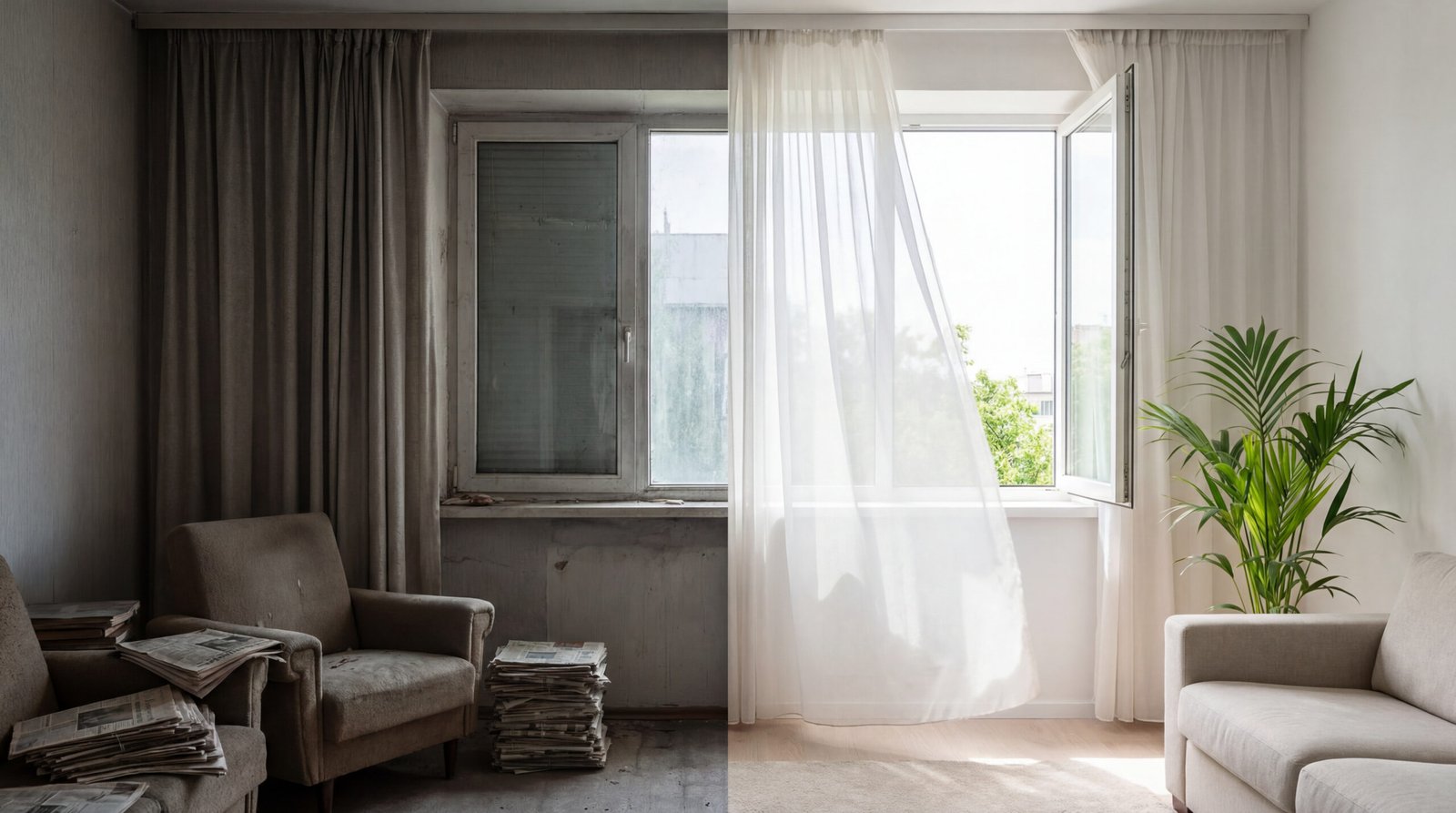
What Causes Stale Air in a House?
If the air in your house feels flat, old, or “used up,” the problem is usually not one single thing. In most homes, stale air comes from low air exchange, closed rooms, trapped humidity, dust-holding surfaces, or airflow that never fully refreshes the space.
That matters because stale air does not always smell strong. Sometimes it just feels dull. A room may seem heavy, tired, or less comfortable than the air outside. In other cases, the air carries a light musty note, lingering cooking odor, or a closed-up feeling that never fully leaves.
This page focuses on stale air as a home-environment problem, not a medical diagnosis. If the air feels stale in multiple rooms, start with airflow first, then check humidity, dust zones, and any area that seems to hold odor longer than it should.
What “stale air” actually means
“Stale air” is everyday language, not a technical diagnosis. People usually mean one or more of these things:
- the room feels closed up
- the air does not feel fresh after sitting for hours
- smells hang around too long
- the room feels worse after the door stays shut
- the air improves after a short cross-breeze
Stale air often overlaps with poor ventilation, but they are not always identical. A room can have some airflow and still feel stale if humidity is high, fabrics hold odor, or dust has built up in the places where air settles.
That is why broad guides like How to Improve Indoor Air Quality Without Expensive Equipment are useful for long-term habits, while a stale-air check is better for figuring out what is making one part of the house feel old or flat right now.
The most common causes of stale air at home
Low air exchange
This is the most common cause.
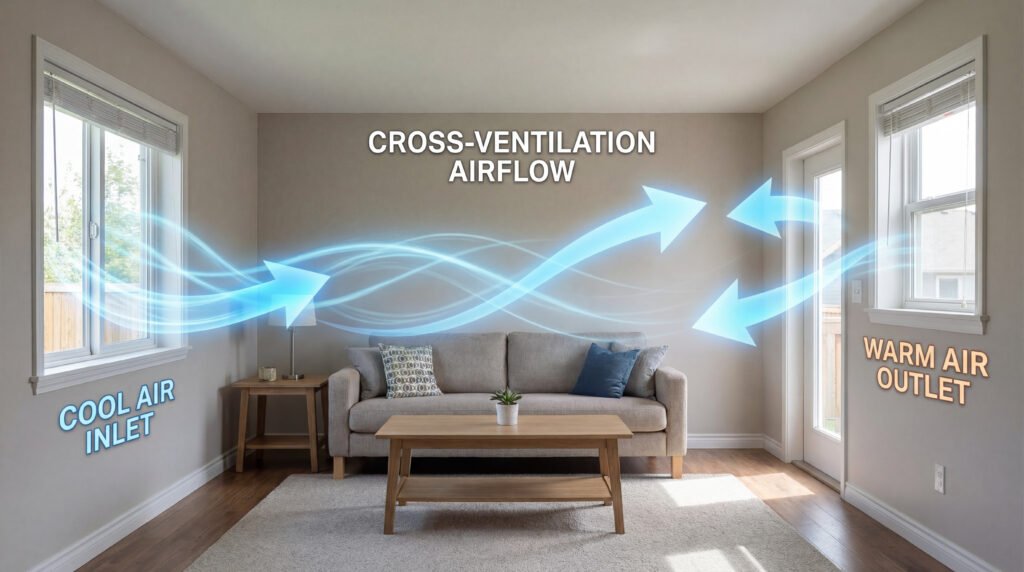
If indoor air stays indoors too long, it stops feeling fresh. A single open window is often not enough. Air usually needs a path to move through the room and out of the house.
Common signs:
- the room improves when two openings are used
- closed rooms feel worse than open-plan areas
- the house feels fresher after a short air swap
If you already open windows but the house still feels dull, read Why Does My House Feel Stuffy Even With Windows Open? because stale air is often really an airflow-path problem.
Rooms that stay closed too long
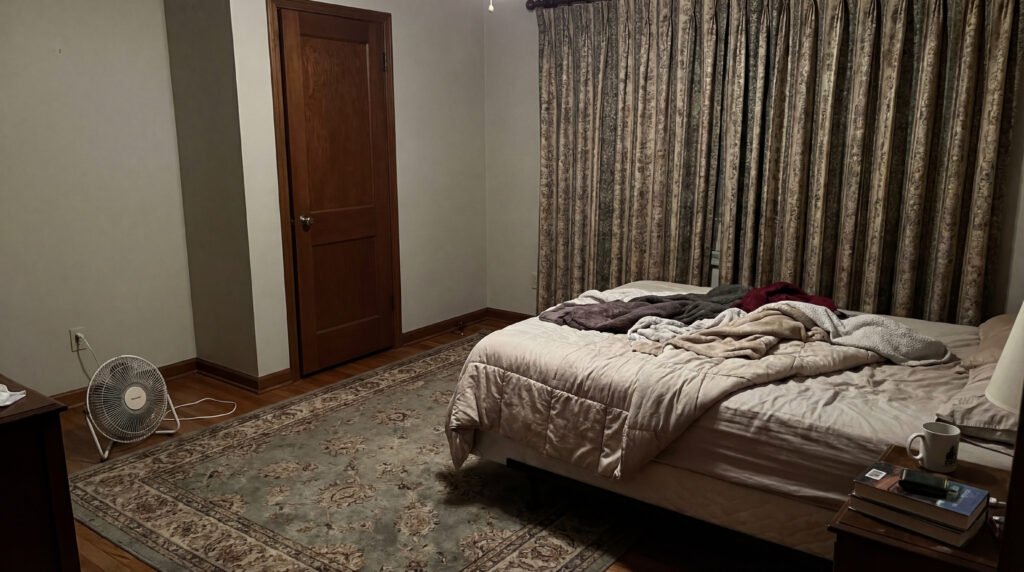
Bedrooms, offices, guest rooms, closets, and low-use rooms often feel stale first. The reason is simple: air movement drops when doors stay shut and nobody is actively refreshing the room.
This is especially common when:
- the room has only one window
- the door stays closed most of the day
- furniture blocks air movement
- the room gets warmer than the rest of the house
A closed room does not have to smell bad to feel stale. It may just feel “old” within a few hours.
Humidity that traps odors and heaviness
High humidity can make stale air feel even worse. Moist air holds onto odor, slows evaporation, and makes a room feel heavier than it really is.
Watch for:
- slight window condensation
- a sticky or soft feeling in fabrics
- a room that feels worse after showers, cooking, or rainy weather
- a mild musty note that keeps coming back
If that sounds familiar, the stale-air problem may partly be a humidity problem. In that case, check Is High Indoor Humidity Bad for Your Health? before you treat this as “just ventilation.”
Dust and soft surfaces that hold old air
Stale air often collects where particles and odor settle.
That includes:
- rugs
- curtains
- upholstered furniture
- bedding
- under-bed storage
- corners near vents
- cluttered shelves
Dust does not only make a room dirty. It can make air feel older and duller because it sits where airflow is weakest. If your room looks clean but still feels off, Why Dust Builds Up Every Day Even After You Clean can help you find the real dust-holding zones.
HVAC and airflow imbalance
Sometimes the air feels stale because the room is not getting refreshed evenly. One room may always feel worse because:
- a return vent is blocked
- a supply vent is weak
- furniture interrupts the air path
- the system circulates air, but does not really refresh the room
In other words, the air is moving a little, but not enough in the places that matter.
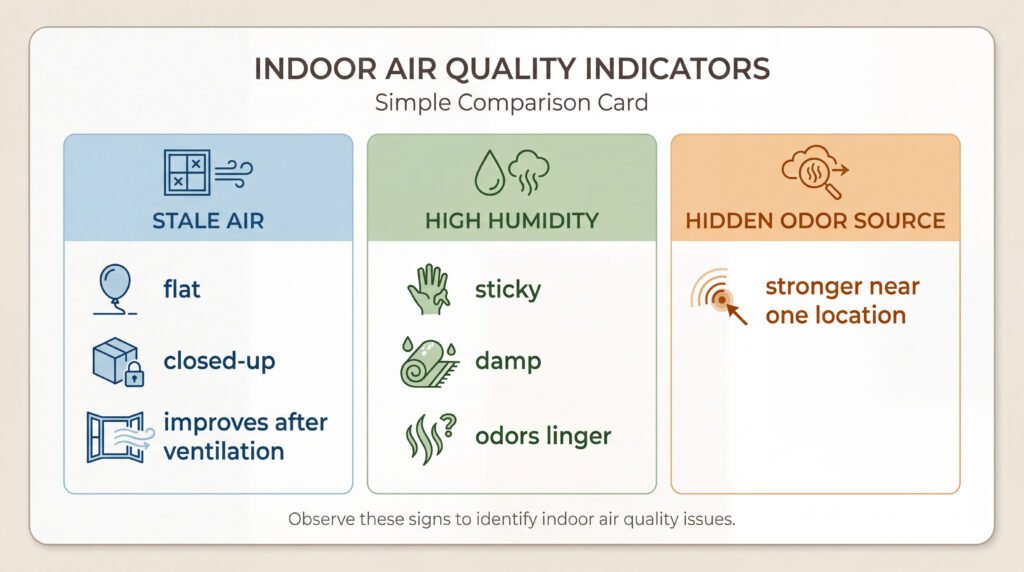
How to tell stale air from humidity, odor, or a hidden moisture problem
These issues overlap, but they do not behave the same way.
It is probably stale air when:
- the room improves after a real cross-breeze
- the problem is worse in shut rooms
- the air feels flat more than wet
It is probably high humidity when:
- the room feels sticky or soft
- odor lingers longer on damp days
- condensation shows up on windows or cool surfaces
It is probably an odor-source problem when:
- the smell is strongest near one area
- kitchen, trash, pet, or fabric zones stand out
- the room still smells off after airflow improves
It may be a hidden moisture problem when:
- a musty smell keeps returning
- one corner or closet smells worse than the rest
- the room feels stale again quickly after ventilation
If stale air keeps turning into a musty smell, do not ignore that shift. At that point, the better next page is Why Does My House Smell Musty Even When It Looks Clean?
A 10-minute stale-air reset you can do today
Do this before you deep-clean anything.
Step 1: Create a real air path
Open two openings on different sides if possible. That could be:
- two windows
- a window and a door
- a bedroom door plus a hallway opening
Step 2: Open interior doors
Do not refresh only one point. Let air move through the house.
Step 3: Clear the worst “air traps”
In the room that feels stalest, quickly check:
- rugs
- curtains
- bedding
- trash
- laundry
- pet areas
- piles of stored fabric
Step 4: Remove one obvious source
Take out trash. Move damp towels. Open a closet. Shake out stale bedding. Do one source-removal step, not ten random ones.
Step 5: Recheck after 10 minutes
Ask:
- does the room feel lighter?
- does the smell drop?
- is the problem weaker with the door open?
If yes, your stale-air issue is mostly airflow + trapped sources, not a mysterious whole-house problem.
How long it should take stale air to clear
If the issue is mostly low air exchange, improvement can happen fast. Many rooms feel noticeably better within 10 to 20 minutes of a true cross-breeze.
If the room still feels stale after that, one of these is usually true:
- humidity is still high
- fabrics are holding odor
- dust load is higher than expected
- airflow is uneven room to room
- there is a hidden moisture source nearby
That is the key difference. Pure stale air clears quickly. Source-driven stale air comes back.
When stale air is a sign of a bigger home problem
Take it more seriously if:
- stale air returns in the same room every day
- the room shifts from stale to clearly musty
- the area feels damp, not just dull
- one room is always worse than the rest of the house
- airflow changes do almost nothing
At that point, the goal is no longer “freshen the room.” The goal is to identify the repeating driver.
FAQ
What causes stale air in a house most often?
The most common cause is low air exchange. Indoor air stays in place too long, especially in closed rooms, and starts to feel flat, dull, or old.
What does stale air feel like?
Most people describe it as air that feels closed up, less fresh, or slightly heavy. It may not have a strong odor, but it feels worse than outdoor air or freshly ventilated rooms.
Does stale air always mean high humidity?
No. Humidity can make stale air feel worse, but stale air can also come from low airflow, dust, fabrics, and rooms that stay shut too long.
How do I get stale air out of a room fast?
Create a real cross-breeze, open interior doors, and remove one obvious source like trash, damp fabric, or trapped odor near soft surfaces.
Why does stale air come back so quickly?
If stale air returns within a short time, the room likely has a repeating source such as humidity, dust-holding fabrics, weak airflow, or hidden moisture.
About the Author
This article was prepared by the Wellzenx Editorial Team for readers trying to solve a very specific home-comfort problem: air that does not feel dangerous, but does feel old, flat, or hard to refresh. Our editorial approach for pages like this is simple: explain the environment clearly, separate overlapping causes, and give readers a short test they can run before wasting time on the wrong fix.