
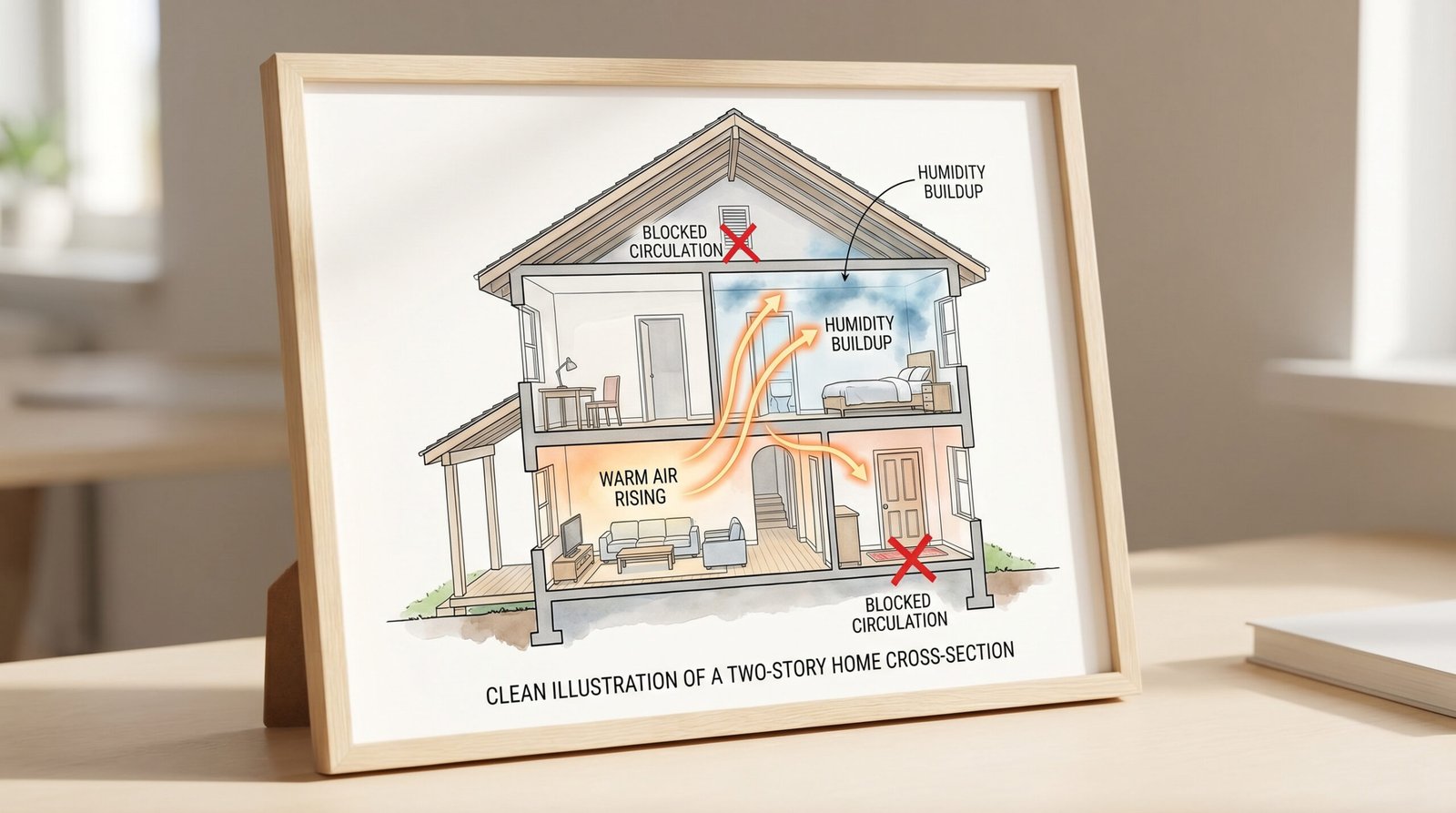
Why Does My Upstairs Bedroom Feel More Humid Than Downstairs?
10-Minute Airflow Checks + Heat-Humidity Fixes That Actually Work
If your upstairs bedroom feels warmer, stickier, or harder to sleep in than the rest of the house, you’re not imagining it.
In many homes, upper floors trap:
- more heat
- more moisture
- less airflow
That combination makes humidity feel worse upstairs even when the whole house technically shares the same air system.
The good news:
you usually don’t need a remodel to improve it.
Most cases come down to one or more of these:
- weak airflow delivery upstairs
- poor nighttime air circulation
- humidity buildup from showers/laundry
- solar heat gain
- closed-door pressure imbalance
This guide helps you:
- identify the main driver in 10 minutes
- run a 48-hour comfort reset
- reduce upstairs humidity rebound
Fast Reality Check: Is It Really Humidity?
Before buying equipment, separate:
- humid air
from - stuffy/warm air
from - poor circulation
Signs it’s likely humidity
- Sheets feel damp or sticky
- Air feels heavier at night
- Room feels worse after showers
- Windows occasionally fog
- Clothes in the room smell slightly stale
Signs it’s more airflow/heat related
- Room improves immediately with a fan
- Air feels hot but not damp
- One closed room feels much worse
- Upstairs hallway feels warmer than downstairs
If the room mainly feels hard to breathe, also read Why Does the Air in My House Feel Thick or Hard to Breathe?
The WellZenx Upstairs Humidity Split Test
This 10-minute test helps identify whether your upstairs discomfort is caused mainly by:
- humidity
- trapped heat
- airflow imbalance
- room pressure problems
Step 1 — Compare upstairs vs downstairs air (2 minutes)
Stand downstairs for 30 seconds.
Then stand inside the upstairs bedroom for 30 seconds.
Ask:
- Does the upstairs air feel heavier?
- Does your skin feel sticky faster?
- Does breathing feel less comfortable?
Write:
- Upstairs worse by: mild / medium / severe
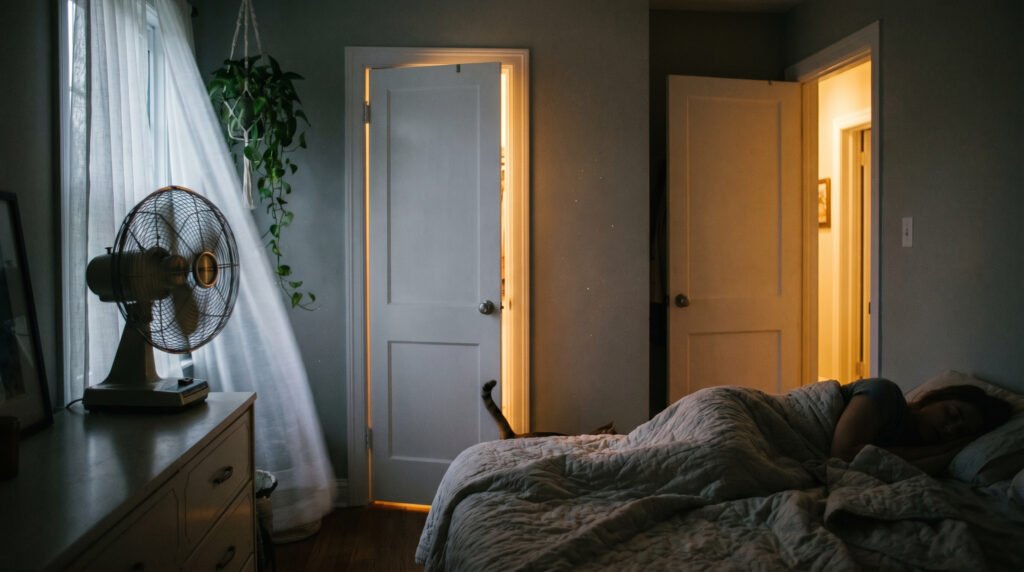
Step 2 — Door test (2 minutes)
Close the bedroom door for 15 minutes.
Then reopen it.
If the room immediately feels less stuffy after reopening:
→ airflow/pressure imbalance is likely a major factor.
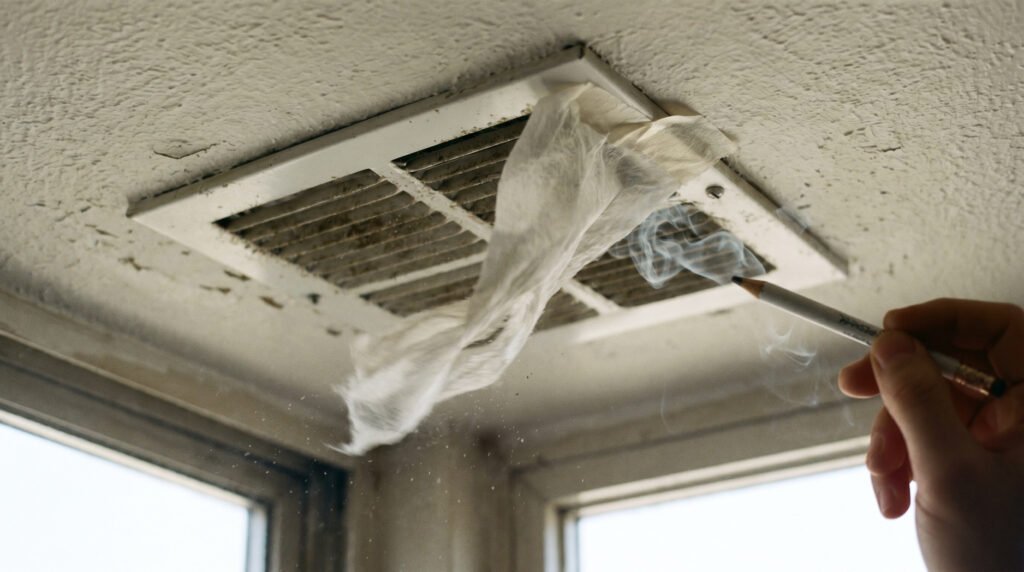
Step 3 — Vent airflow check (3 minutes)
Hold a tissue near the supply vent.
Check:
- weak airflow
- barely moving tissue
- furniture blocking vents
- partially closed vents
Weak upstairs airflow = weak moisture removal.
Step 4 — Window heat test (3 minutes)
Touch:
- upper wall near windows
- blinds/curtains
- window glass edges
If surfaces feel warm even at night:
→ solar heat gain is contributing.
Heat makes humidity feel stronger.
Quick Score
Add points:
- Upstairs feels heavier than downstairs (+2)
- Closed room gets noticeably worse (+2)
- Weak vent airflow (+2)
- Warm window/wall surfaces (+2)
0–2: minor comfort imbalance
3–5: moderate airflow/humidity issue
6–8: strong upstairs heat-humidity trapping
Why Upstairs Rooms Feel More Humid
Warm air rises.
That’s the basic physics.
But upstairs discomfort usually becomes worse because:
- upper floors collect heat during the day
- doors stay closed overnight
- airflow weakens farther from HVAC equipment
- humidity from bathrooms rises upward
- attic heat transfers downward
Humidity also becomes more noticeable when airflow slows.
That’s why many people say:The room feels heavy at night
If your bedroom mainly becomes uncomfortable after the door closes, read Stuffy Bedroom at Night (Door Closed): A Quick Airflow Test + Fixes That Actually Work.
10-Minute Checks That Solve Most Cases
Check 1 — Open the bedroom door for 10 minutes
This is the fastest diagnostic.
If the room improves quickly:
- you probably have airflow imbalance
- not a whole-house humidity emergency
Many bedrooms become pressure traps overnight.
Check 2 — Look for blocked return airflow
Most people only check supply vents.
Check:
- return vent blocked by furniture
- thick rugs blocking door gaps
- packed closets reducing circulation
- curtains trapping vent airflow
Air must both:
- enter
- and leave
Check 3 — Bathroom humidity migration
Upstairs bathrooms often feed nearby bedrooms.
After showers:
- leave bathroom doors open briefly
- run exhaust fans longer
- check if bedroom worsens afterward
The EPA recommends using bathroom exhaust to remove moisture generated indoors.
If your bathroom stays damp after showers, read Bathroom Smells Musty After a Shower? What It Usually Means and What to Check First.
Check 4 — Sun-facing wall overload
West-facing upstairs rooms often trap heat into the evening.
Check:
- blinds
- blackout curtains
- afternoon sunlight exposure
Heat load can make moderate humidity feel much worse.
Fix Paths (Choose the Closest Match)
Fix Path A — Closed room becomes stuffy fast
Main issue:
airflow imbalance
Do this:
- Keep the bedroom door cracked overnight for testing.
- Remove objects blocking vents.
- Run a fan to keep air moving across the room.
- Avoid pushing furniture tight against walls.
Even simple circulation improvements can reduce indoor pollutant buildup and improve comfort.
Fix Path B — Upstairs feels sticky during humid weather
Main issue:
humidity load
Do this:
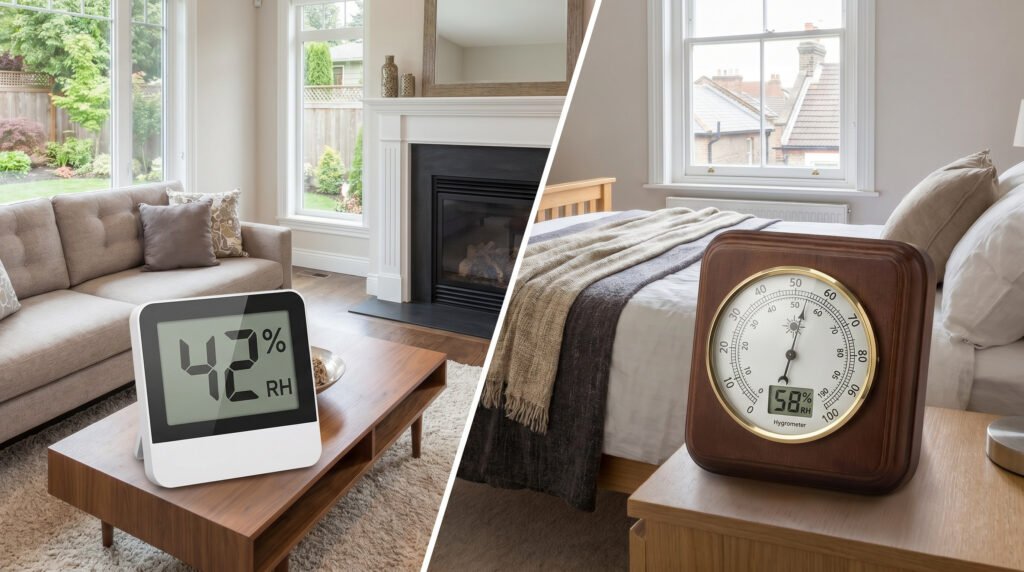
- Measure RH with a hygrometer.
- Reduce indoor moisture sources at night.
- Run dehumidification if RH stays elevated.
The EPA says indoor humidity should stay below 60%, ideally between 30–50%.
If humidity stays high throughout the house, read Is High Indoor Humidity Bad for Your Health?
Fix Path C — Room overheats from sun exposure
Main issue:
solar heat gain
Do this:
- Close blinds before peak afternoon sun.
- Use thermal curtains.
- Reduce heat storage during the day.
This often lowers nighttime discomfort dramatically.
Fix Path D — Air feels stale upstairs only at night
Main issue:
overnight stagnation
Do this:
- Run fan circulation before sleep.
- Avoid sealing the room completely.
- Keep return airflow open.
If your room still feels stale even with windows open, read Why Does My House Feel Stuffy Even With Windows Open?
The 48-Hour Upstairs Comfort Reset
Hour 0–2 (Today): Remove airflow blockers
- Open vents fully
- Pull furniture away from vents/walls
- Open closet doors briefly
- Wash damp-smelling bedding if needed
Hour 2–24 (Tonight): Control nighttime buildup
Before bed:
- crack the bedroom door slightly
- run bathroom exhaust after showers
- circulate air with a fan
If cooking heat contributes upstairs, use kitchen exhaust during and after cooking. EPA notes that range hoods help remove indoor pollutants and moisture.
Hour 24–48 (Tomorrow): Re-test comfort
Repeat the Upstairs Humidity Split Test.
Ask:
- Does the room still feel heavier upstairs?
- Did reopening the door help less?
- Is airflow stronger now?
If improvement is noticeable:
your main issue was airflow + heat trapping.
30-Day Prevention Plan
Weekly
- Check vents for blockage
- Keep airflow paths open
- Run bathroom exhaust after showers
During humid weather
- Monitor RH
- Reduce moisture accumulation upstairs
- Dry damp fabrics quickly
During summer
- Block afternoon heat before it enters
- Use airflow earlier in the evening
- Avoid trapping warm air overnight
If you want a broader low-cost strategy, read How to Improve Indoor Air Quality Without Expensive Equipment.
When to Escalate
Consider professional evaluation if:
- upstairs RH stays high despite dehumidification
- one room smells persistently damp
- condensation appears regularly
- HVAC airflow upstairs remains extremely weak
- comfort problems keep worsening seasonally
FAQ
Q1: Why is my upstairs bedroom more humid than downstairs?
Warm air rises, upper floors trap heat, and airflow is often weaker upstairs. Closed doors can also trap moisture and stale air.
Q2: Can poor airflow make a room feel humid?
Yes. Slow airflow makes humidity feel heavier even when RH isn’t extremely high.
Q3: Should I leave my bedroom door open at night?
As a test, yes. If the room improves quickly, airflow imbalance is likely contributing.
Q4: What indoor humidity level is recommended?
EPA guidance suggests below 60%, ideally 30–50%.
Q5: Why does the room feel worse after showers?
Bathroom moisture can migrate into nearby upstairs bedrooms if ventilation is weak.
Q6: Does sunlight make humidity feel worse indoors?
Yes. Heat load increases discomfort and can make moderate humidity feel much heavier.
Author Trust Block
Written by: WellZenx Editorial Team
Reviewed by: Home Environment Standards Editor (WellZenx)
Editorial standards: This article follows our Editorial Policy and fact-checking process.
Why trust this: This article focuses specifically on upstairs bedroom humidity imbalance using a practical airflow-first diagnostic approach: room pressure testing, vent airflow checks, RH comparison, and nighttime heat-load evaluation. The guidance is based on common residential airflow and moisture patterns seen in multi-level homes, along with EPA guidance on indoor humidity targets, ventilation, and moisture management for improving indoor comfort and reducing stale-air buildup.
Medical disclaimer: This content is for general education and does not replace medical advice.
Last updated: May 1, 2026
Related pages: Editorial Policy • Corrections • Medical Disclaimer • About WellZenx